The sand piled up around a steadily deepening hole as she laboured to hollow out a nest for her eggs. Her breathing rasped. The sand scratched. Behind her, the ocean whispered and sighed. Ghost crabs moonwalked where the sea wash shone silver on the sand. It was mesmerizing.
“Sometimes a flipper gets bitten off by a shark. She’ll still dig with it,” said Andy Coetzee, a man with ocean-blue eyes and salt in his veins, who has seen thousands of turtles enact their destiny on the beaches of Maputaland. Stretched between St Lucia’s mouth to Maputo Bay, these beaches are South Africa’s haven for rare and endangered loggerheads and leatherback turtles. They’re the only species that nest on South African shores, although green, hawksbill, and Olive Ridley turtles swim in our seas.
Andy is one of their champions. “I love them,” he explained. And like the turtles, this gifted author, TV presenter, naturalist and guide keeps returning to these beaches, year after year, to assist researchers and conservationists working on the Maputaland sea turtle program.
The turtle nesting beaches are part of iSimangaliso Wetland Park, managed by KZN Ezemvelo. Female turtles will have been at sea for two decades before an invisible (to us) thread draws them to this specific stretch of coastline, usually within a few kilometres of where they were born. The turtles will lay several clutches of eggs each season. During these months, accompanied by accredited guides from the community, you can carefully observe the turtles nesting or hatchlings making their way to the sea.
Turtles helped put Maputaland on the map and, each season, bring tourists to lodges like Big Skies Gugulesizwe or the upmarket Thonga Beach Lodge. They also represent the value of the marine reserve that protects Africa’s southernmost coral reefs, long sandy beaches, and deep submarine canyons. Aside from the marine reserve, there are more than 200 000 hectares of protected areas in Maputaland, including St Lucia, Sibaya, and Kosi Bay freshwater lakes. It could be the smell of this freshwater that helps guide the turtles home when they mature. Such is the interconnected nature of life in this unique system with its assimilation of beaches, coral reefs, wetlands, swamps, lakes, woodlands, coastal forests, and grasslands.
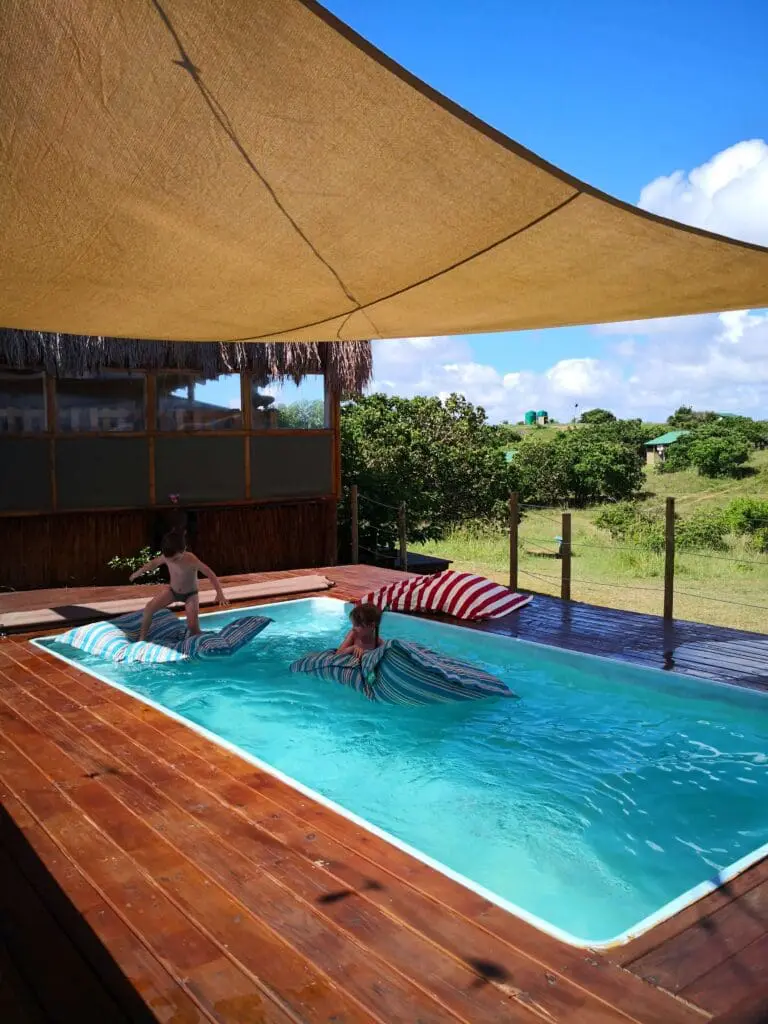
I was staying at Gugulesizwe, an intimate camp in iSimangaliso’s buffer, where Andy had spent much of the Covid-19 lockdown with James McCulloch, founder of the ethical travel company Big Skies. In between his adventures, Andy guides coastal walking tours through Maputaland, where he is known as “Khanda Leyone” (head of the bird) by the local Thonga fishermen because of his hat full of colourful feather flies for fishing. And James is considered local, having visited the area since early childhood and then lived in Maputaland as a manager at Wilderness’s now-closed Rocktail Bay Lodge.
“Turtles represent something special about the area – there’s nothing like them – but Maputaland’s a refuge for so much more. There’s a rich, vibrant community here, too,” James explained as we planned our three-day itinerary for exploring the area. We settled on turtles (tours take place at night, aligned to the tides), a day on the Kosi Bay lakes, snorkelling at Lala Nek (also tide dependent), then, a day at Black Rock beach. In between, we’d stop in Manguzi, a chaotic, colourful vibe of a town and swing by the the Phala (relax) Baby Tuckshop, and possibly take in a local bar or soccer match. Maputaland was a homeland during apartheid, and it still lacks resources, but it’s dynamic. Lived in. Lush. Turtles may be important for tourism, but the people here love cattle, enjoy a party, and still live close to nature.
This is something tourism entrepreneur Eugene Tembe understands. Known as “Malume (uncle), by James, Eugene grew up herding cattle, hunting birds and eating wild fruits, just a few kilometers from Gugulesizwe, the camp he founded with James. “I love this area with my whole heart,” said Eugene. “And I do business with James because of how he allowed the community’s vision to shape his own vision.” The latest addition to the Big Skies collection (Gugulesizwe and Little Gugs) is Bheki’s camp. Bheki Nhlozi is a cattle herder turned lodge shareholder. His precise vision for his land, dotted with wild date palms and gladioli, promises guests some of the best ocean views and a sunset deck he’s badgering James to build. As co-owners of Gugulesize, with the Kwamakupane community, James and Eugene believe that tourism should give power to local people through ownership, jobs, and respect for their wishes, values, and voices.
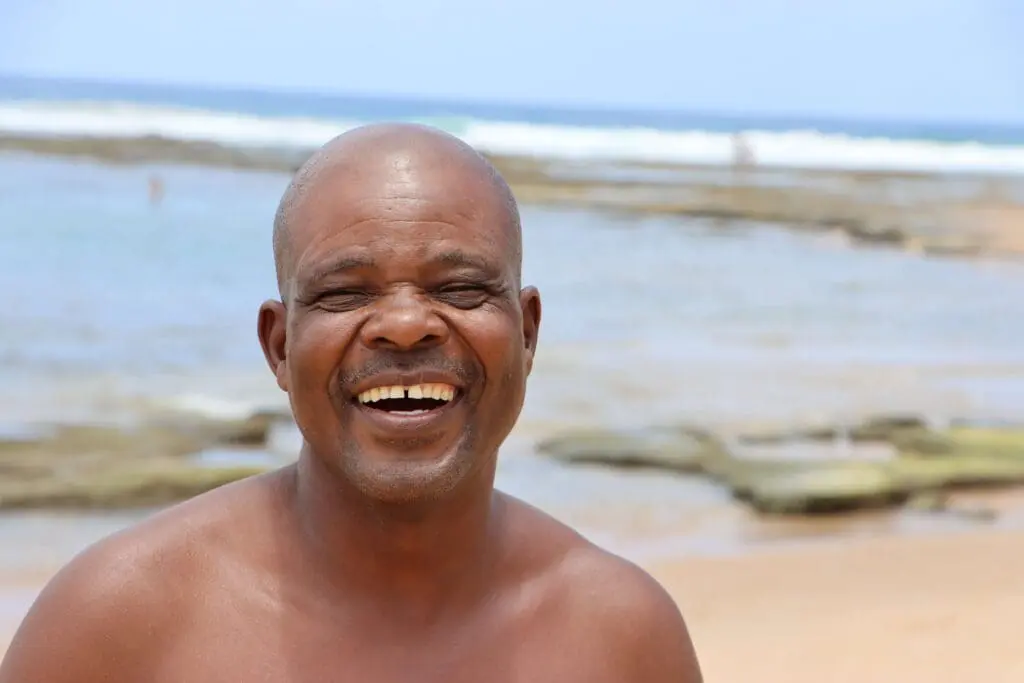
We found Eugene on his boat at along the north-western shore of Lake Nhlange, doing final checks before he took us out to explore the interconnected Kosi Bay system. Its four lakes are influenced by rainfall, tides, and their link to the Indian Ocean. They are ecologically significant but also culturally important to the local communities who rely on their resources for their livelihoods. The fourth lake is closed to visitors, so fish and crocodiles can breed. Eugene’s evident enchantment with his backyard was infectious as we watched hippos lounge in the shallows. Pygmy kingfishers shone like jewels in the reeds. A fish eagle perched in a riverside tree. Cormorants duelled for the best perches. Richly patterned Nguni cattle idled in the muddy shallows before lunging and splashing away.
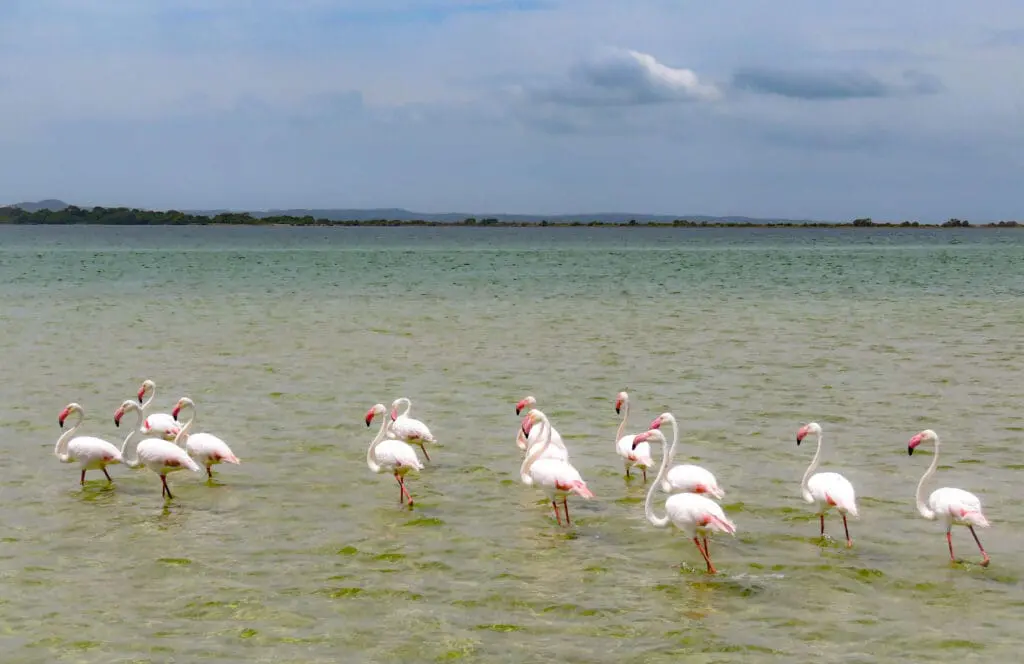
It was a lot to take in, and there was more. Emerging into the second lake, I noticed a blush on the water. Flamingos. Then, we drifted near the weathered silver oak poles of fish traps as dozens of kingfish darted and spun through the water. Eugene laughed: “I don’t have to explain these; the fish are showing you.” These traps have operated for 800 years, their precise geometry aligned to the currents, tides, and the habits of fish that breed in the estuary but live in the sea. The poles create a labyrinthine pathway, leading the fish into a central holding area known as the “boma.” The fishers scoop out or spear the fish they need.
It’s a traditional and sustainable technique passed down through generations. “It’s human hands at work here. Anyone with a problem with this type of resource use should look at the massive fishing trawlers off our shores,” said James. We bought a spotted grunter for lunch. We snorkelled under the mangroves while the fish slowly cooked, skewered on a stick over hot coals. We caught sand prawns – tiny crustaceans that help clean the estuary by eating microalgae – and feed estuarine fish. Glass fish nibbled our toes. Two women waded past, chest-deep, holding freshly cut reeds to weave into mats or baskets. We ate pineapples bought from a stall in Manguzi, and the succulent fish. We didn’t go down to Kosi mouth or explore the raffia palm forest, but it was the kind of sunkissed day you never want to end.
That evening, Eugene invited us to Hlabezimhlophe, a gathering place for his community built on his old family home as a tribute to his grandfather, a famous headman. En route, we met Mahambane Nhlozi, a famous brewer of Njemane (palm wine) and tried his surprisingly crisp local brew (amidst warnings not to drink too much). Like making fish traps, harvesting palm sap to make beer is a craft passed down through generations.
Eugene developed Hlabezimhlophe with help from James, Andy and his community, using salvaged materials. There is a pool, library, crafting space, restaurant and simple accommodation, which Andy uses for his walking tour guests on one night of their trail. The pizzas in the homemade oven cooked while we hung on the words of the evening’s guest of honour Sigiya Mlambo an old friend and raconteur well into his eighth decade, who had known Eugene’s grandfather.
What does Sigiya think about the turtles? “They are just part of being here,” he said. However, as a child, they had terrified him and others because it was common for parents to tell their children the turtles would take them out to sea, never to return. In those days, most sightings would have been by fishermen on the beach. Today local people have grown up knowing more about the turtles. Researchers like George Hughes, Dr Ronel Nel (who heads up current turtle research), and Andy are well-known characters. So are the turtle guides: Mbongeni Myeni at Gugs (as the camp is affectionately known), Gugulethu Mathenjwa at Thonga, Agrippa Shange and others at nearby beaches like Bhanga Nek.
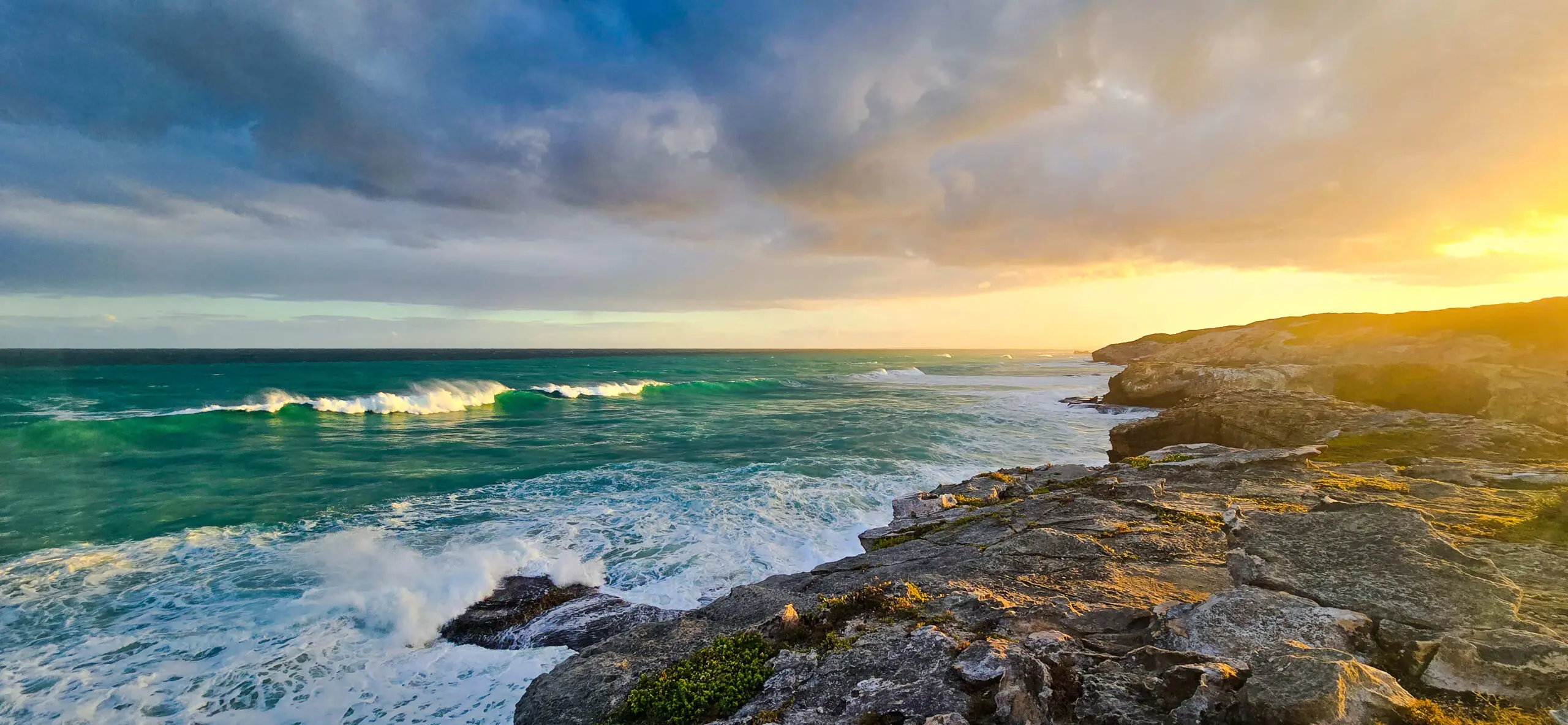
The following morning’s sky was like a cut lemon as we drove down to the beach at Lala Nek from Gugs, through milkwood, mangosteen, and fig trees, remnants of the Afrotropical woods that once covered this coast. Andy had left to guide a group of walkers, but we could see his early morning footprints close to the tell-tale tracks of another turtle – this time the more common loggerhead. We focused on not falling over our flippers as we waded into the warm ocean. Then, we were privileged guests in an astounding aquatic world, just meters from the beach and partly in crystal clear water shallow enough to stand.
Aside from his turtle tours, this is guide Mbongeni’s favourite activity. “He taught me to snorkel here when I was four or five,” said James. We found a marbled electric ray burrowed in the sand. Saw semi-translucent sand breams. Juvenile angel fish. Wrasses. Triggerfish. Rare cry fish. Fantastical-looking parrot fish painted in vivid blue, green, yellow, purple, orange, and pink hues. We emerged an hour later with a list of incredible species. “The ocean is a wild thing. After 30 years, it can still surprise you,” said a grinning Mbongeni.
In two months, turtle hatchlings that had survived the ghost crabs and raids by honey badgers, monitors, and birds might swim here. There are more predators in the ocean, but they will head east, find the warm, fast-flowing Agulhas current that moves southwards along the eastern coast of South Africa, close their little front flippers, and drift. Some may hitch a ride on the warm, northward-flowing current that runs along the eastern coast of Mozambique at different stages of their life cycle. They eat whatever’s in their path until their maturing bodies signal it’s time to find a territory and head for home shores to pass on their genes.
A couple out of every thousand hatchlings makes it to adulthood. Some cling to the coast, and others are ocean wanderers. Some leatherbacks have been tracked around into the Atlantic. Others visit the Antarctic pack ice before returning to Maputaland. Humans remain their greatest threat – through pollution, poaching, habitat destruction, dangerous fishing practices, and human-induced climate change. Even at Lala Nek, bits of plastic littered the high tide mark.
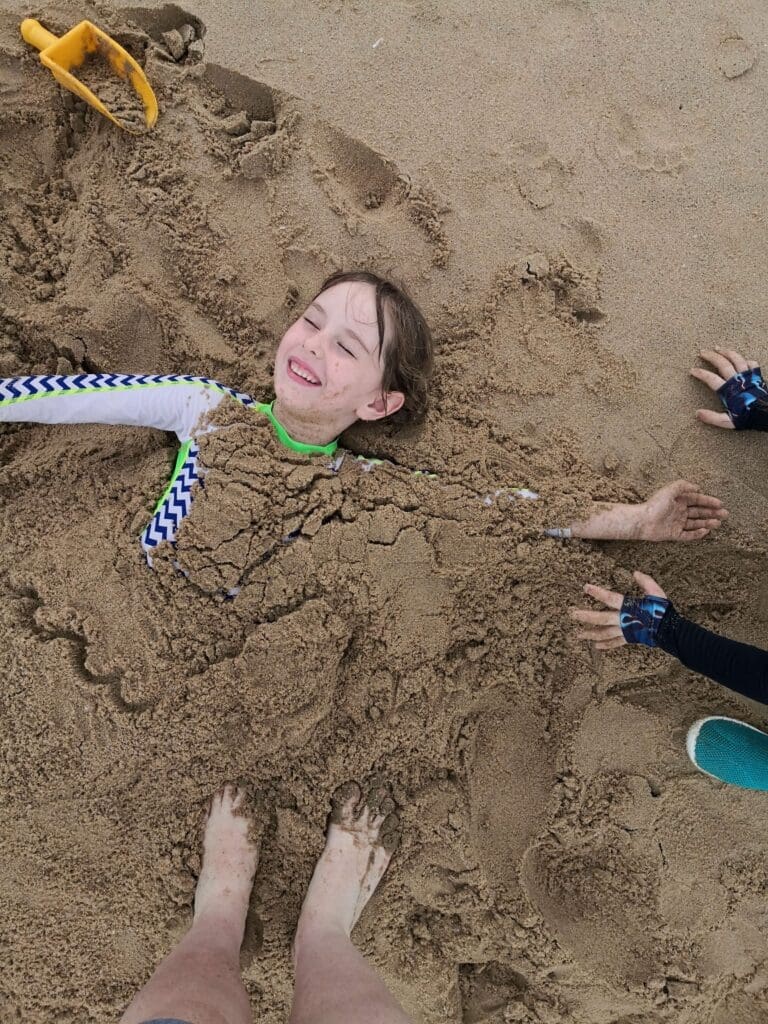
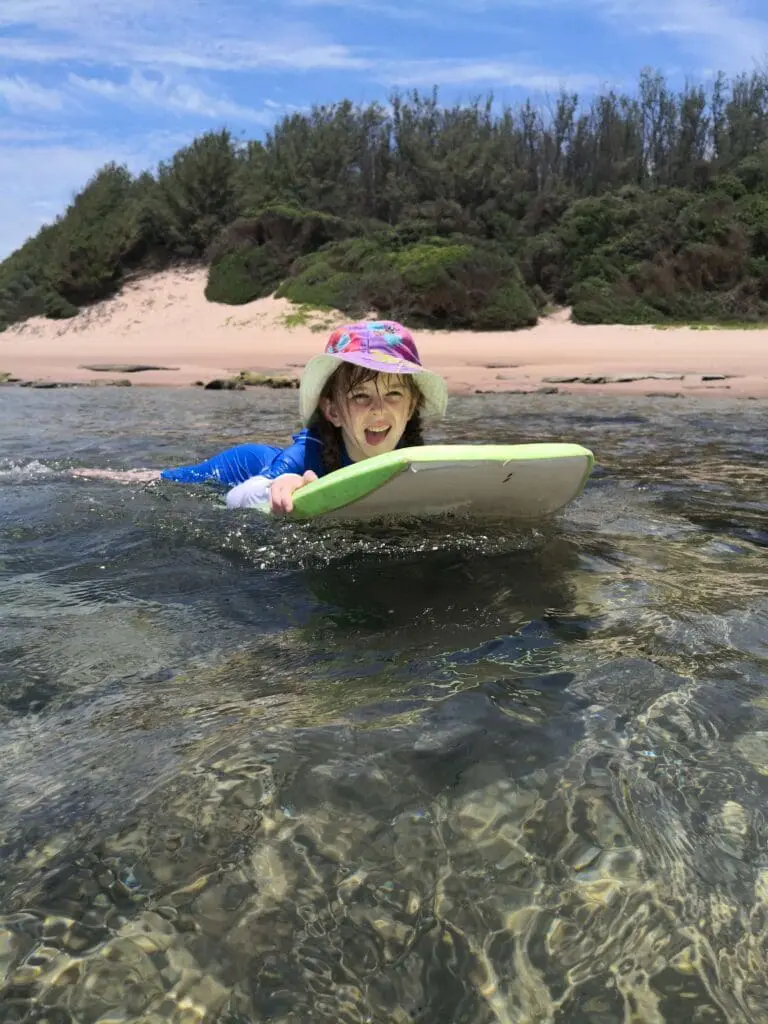
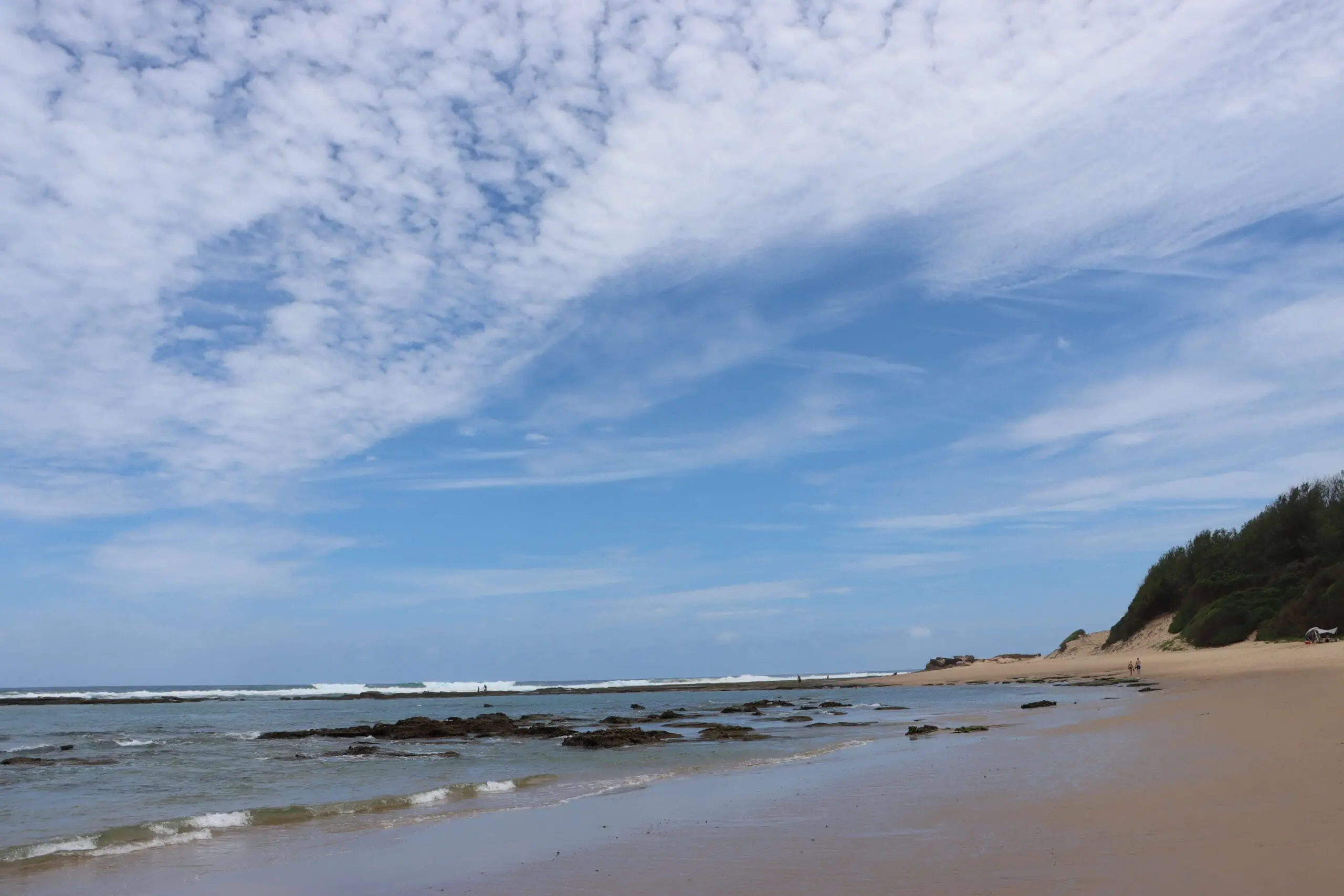
My final day in Maputaland was spent at Blackrock Beach. To get there, we drove past coning cycads and water lily-filled lakes filled with white-faced ducks and lily-hopping jacanas. We spotted red chested sunbirds, fiscal shrikes, chestnut vented tit babblers, speckled mousebirds and more. Then, we climbed forested dunes (some of highest in the world) and arrived at the beach through a tunnel of giant strelitzias. An elderly fisherwoman was reeling in a silvery pompano; otherwise, it was just us, the crabs and some lazy cattle.
Far out on the ocean, there was a flash of dolphins. In winter, there could be whales too. From the top of the protruding rock the beach is named after, Mbongeni gave a shout. Had he spotted the Bouton’s snake-eyed skink? It’s only found in Mauritius and Mozambique and – bizarrely – on this rock. No – he’d seen a green turtle in the surf below. After a brief glimpse, the turtle disappeared into the water, into an ocean big and wild enough to keep many secrets.
Returning late to Gugs, fruit bats flew about and spotted thickknees (nocturnal birds) darted in the headlights. The hills were dotted with warm light, and music and wood smoke drifted on the breeze. James slowed down frequently to shout a greeting. We give a lift to a night guard, William, whose wife has just had a baby.
Back at camp, we could hear the echoes of the oceans and the endless interplay between the sea and the land.
About Gugulesizwe:
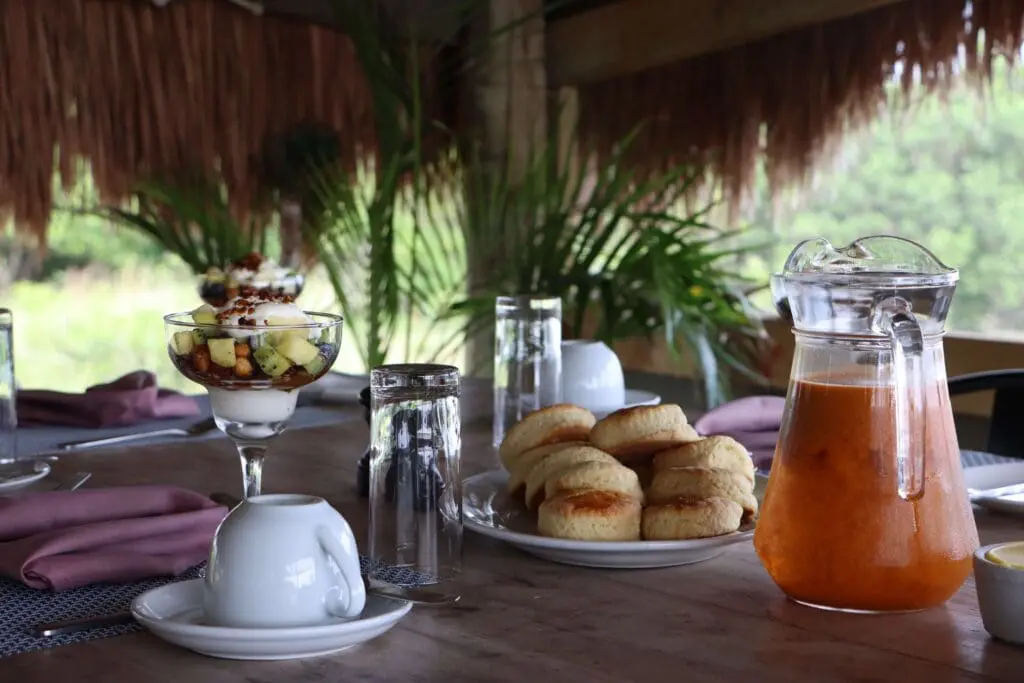
Gugulesizwe has three camps that can be booked per person or on an exclusive-use basis. Rooms are palm-fringed and airy, inspired by local design. Vegetarian meals are served in open-air dining areas with palm-thatched roofs. The food is fresh, simple, and hearty — tacos, burgers, fresh fruit, and delicious desserts. There are places to gather or be alone. Hammocks. A boma. Pool pillows. Bookshelves overflowing with well-worn field guides. There’s almost cell phone service and limited wife. It’s perfection.
The camp is four kilometres from the beach, offers transport for guests without 4x4s and can also arrange all other tours and transfers.