The pretty pink flowers seem to be floating in the mist, each with two curious yellow dots poking out at the end of the stamens. As we get closer we see the flowers are mounted on stalks that pop out of rosettes of leaves. It has rained and the plants are submerged in water, growing out from the shallowest layer of soil on top of the rocky summit. This is the resurrection plant of Mariepskop, one of the highest peaks in the northern Drakensberg.
In dry periods, Craterostigma wilmsii shrivels to nothing. The leaves dry out and its existence is a secret once more. After the rains, the perennial herb absorbs water quickly and the entire plant miraculously recovers within 24 hours.
As we step off the rock, mist still blazing through the marshy mountain grasslands, we step onto a strip of soggy black soil covered in lush grasses, sedges and forbs. As wetland guru Anton Linström’s feet land, the earth moves. He’s on a typically springy patch of peat wetland, another water-related miracle on the summit of Mariepskop.
These recently described peatlands function as water towers to keep the flora of Mariepskop and the Lowveld at its feet hydrated throughout the year, through a network of waterways that are only just being mapped.
Although Anton described the peat seepage areas on top of Mariepskop and the peat swamps in the rain forest further down the mountain in internal reports two decades ago, in 2019 he managed to confirm these peatlands in the upper Klaserie and Sand River catchments officially, in collaboration with Dr. Lulu Pretorius (University of KwaZulu-Natal and the Centre of Wetland Research and Training) and teams from the Association for Water and Rural Development (AWARD) and Kruger to Canyons Biosphere Region (K2C BR).
This work is part of a coordinated effort to safeguard and where needed, restore ecological health not just of the highest point of the Blyde River Canyon, but the whole Blyde River Canyon Nature Reserve, the Mariepskop Forest Reserve and the Mariepskop State Forest.
This work has been undertaken as part of a larger collaborative project with a diversity of partners that includes the Department of Agriculture Forestry and Fisheries (DAFF), Mpumalanga Tourism and Parks Agency (MTPA), South African Environmental, Department of Environmental Affairs (DEA), South African National Parks (SANParks), Observation Network (SAEON) and the Blyde Communal Property Associations (CPAs). Together, they make up the Blyde Restoration Working Group.

“This is quite exciting,” says Linström, as he takes the metal auger from Pretorius, who has also joined this weekend mission of the Mpumalanga-based Plant Specialist Group in early January 2020, to explore the wetlands and see first hand the efforts being made to preserve them. Both wetland specialists are as handy with the soil sampling tool as the other and they’re both passionate about the research and conservation of areas like this one on the top of Mariepskop.
Peat can hold up to ten times more water than other wetland soils, making it an important resource in a water-scarce country such as South Africa. “Think of this area as water towers,” says Linström, as he zooms in on the vegetation to record the species composition with help from the accompanying botanists, who are being marshalled along by Dr. Mervyn Lötter, Control Scientist: Biodiversity Planning at the Mpumalanga Tourism and Parks Agency.
As the mist temporarily turns to rain, the clouds of migrating brown-veined white butterflies take refuge under grass stalks, patiently hanging on while fat raindrops soak the peat even further. A Cape Grassbird’s call rings once or twice, before an assortment of frog species take over and embark on an ancient choral piece that they have been performing in these wetlands for centuries.
“These peatlands are of significance,” says Pretorius, describing the way today’s rain water will start a journey downwards in ‘super slomo’, first moisturising the soggy peat and then slowly dripping down through rocky cracks into the spectacular afromontane mistbelt forest below. “We suspect that the swamps in the forests further down the mountain are drainage areas of these seeps. Everything is interconnected,” he says.
While most people in the Lowveld understand that the escarpment is the source of their water, few realise that the escarpment also hosts a critical network of wetland systems. Very little research or mapping of these systems has been conducted and as a result they are poorly understood.
The escarpment areas are water catchments where the intact grasslands and forests “catch” rainfall and mist in wetlands that is slowly discharged into the many rivers that the Lowveld economies downstream rely on. Iconic rivers such as the Blyde, Sabie, Sand and Klaserie originate in these mountains.
Classified as a National Strategic Water Source Area, it gets 1000 – 2000 mm rainfall per annum. Water from the catchment feeds into the Blyde Dam which supports a multi-million-rand agricultural sector around Hoedspruit, and the Kruger National Park and associated private game reserves rely on the water from the mountain to recharge their rivers. The household water supplied to towns such as Hoedspruit, Phalaborwa and Bushbuckridge all originate in the escarpment.
“Simply put without the water from the escarpment, the lives of all people in the Lowveld would be very different and peatlands, as it turns out, play a crucial part of these water provisioning services,” says Jan Graf, from AWARD.


What is worrying is that some of the peat wetlands assessed during the investigation showed signs of drying out during the 2019 research, despite it being the midst of the wet season. While too little is known about these systems to know the exact cause, it is likely that a combination of years of drought coupled with the effects of forestry in the upper catchments are the likely culprits.
This is why the Blyde Restoration Group’s major focus in recent years has been clearing the alien invasive plants that are the legacy of years of commercial forestry on Mariepskop’s lower slopes.
Leaving the plant specialist group to search for more peat on the mountains lowers slops, we bump back down dirt roads that snake around the base of Mariepskop. Below the Afromontane forest belt lie the commercial plantations of alien pine and eucalyptus that are affecting both the water table, and the area’s biodiversity.
This afforestation process started at the beginning of the 20th century, providing the seed source for alien invasive plant species to invade natural habitats especially grasslands, rivers and wetlands. By 1969 some 1,600 ha of Mariepskop Forest Reserve was allocated to timber plantations, while some 3,000 ha was covered by indigenous forest. Since then, the aliens have spread and today, the battle is between the indigenou flora and the plantations that have encroached to even the area’s most inaccessible points. These species degrade natural areas and also use large quantities of water.
“The huge restoration effort being undertaken by the Blyde Restoration Working Group to protect the peat wetlands, but also the rest of this unique, interconnected ecosystem, is unprecedented in South Africa,” says Jan from AWARD. It’s also critical, as the Lowveld is a region facing significant water quality and quantity issues that impact on biodiversity and human livelihoods and these issues are further exacerbated by climate change and plans for mining in the upper levels of the catchment.
The Blyde Restoration Working Group was established in 2015, to facilitate coordinated and integrated restoration and long term maintenance efforts by all the partners. Clearing within the reserve is guided by the reserve’s management plan and restoration plan and aims to secure critical ecosystems and natural resources (forests, wetlands, grasslands and water); conserve high value biodiversity; support livelihoods and up-skill people through restoration
As part of the USAID funded sub-grant K2C and AWARD with support from the Blyde iCMC have been managing an intermediate restoration team in the Lowveld plantation areas around Mariepskop. “Not only do we need more research into these little-known wetland systems in the upper catchments to better understand their functioning, distribution, service provision and management needs, but the current ecosystem restoration efforts to remove alien invasive tree species needs to continue for years to come. The scale is massive,” says Jan.
On the grassy plateaus of all the area’s iconic landmarks (The three rondavels, the Blyde River Canyon and God’s window), the telltale silhouette of alien trees breaks the skyline, but there are fewer than there used to be. Due to just how accessible some of the areas earmarked for clearing are, various specialist skills are needed and the project employs an Intermediate team of restoration champions from local communities and highly trained high altitude teams. The team focuses on eradicating invasive pine (through ring barking) and gum species (using herbicides).These invasive species use large amounts of water and displace natural grassland, wetland and riverine species.
To date teams have cleared more than 50 000ha of alien invasive plants in these catchments (including follow-ups).“We are focusing on areas in the upper Klaserie catchment that have a history of plantation forestry and that will be included in an expansion of the Blyde River Canyon Nature Reserve (areas around Mariepskop) to include more of the mountain’s eastern slopes. The originally proclaimed reserve extended over an area of 26 818 hectares. It will now cover an area of over 50 000 hectares, thanks to a pioneering collaboration between the four Communal Property Associations (CPAs) collectively known as the Blyde Four CPAs that have successfully claimed the land, and various local NPOs and government departments. While not quite the national park proposed more than a decade ago, it will link portions of state-owned forests on the escarpment to create an enlarged park, explains Jan.
Under the new co-management structure communities will benefit from the mountain’s bounty through tourism revenues and job creation as huge tracts of alien vegetation are removed. “The vision of the new landowners is to play a direct and increasing role in the conservation and natural resource management, and hence the custodianship of this area. A strong focus of the project is the capacity development of members employed by the project,” says Jan.
With the effects of climate change already being felt, it’s critical to harness the power of these ecosystems to benefit everyone. “We’re showing we can reverse the effects of year’s of degratation, but we have to act now, especially as a new and imminent threat comes from a large scale gold mining proposal exploration in the area, which could have devastating environmental, economic and social effects on the local area and on downstream communities,” says Jan.

More about the Blyde’s diversity
There are views that simply take your breath away and this is one of them. Standing on a ledge jutting Researcher Jan Graf is quick to dismiss the commonly shared myth that the canyon is the world’s largest green one – there are hundreds of comparable size – but this doesn’t detract from its beauty or intriguing diversity; you can move from mistbelt forest to fynbos in minutes, and tick a narina trogon or a Cape Sugar bird just a kilometers from each other. There are still new species of insects are discovered – a Polish entomologist famously went missing on the mountain for 6 days in 2012 (he survived) – and rare plants that haven’t been seen by any but the most devout of botanists.
One of the reason’s its not better known is that Maripskop was turned into a radar station in the 1950s and remained on high alert for aerial attack from adjacent states until aparthied was dismantled, along with much of the military infrastructure. Development of the first road to the summit was completed in February 1957. This access road was improved during the 1960s, but public access was restricted for many years.
“The landscape is topographically complex, hosting a variety of habitats, including grassland plateaus, wetlands and sponge areas, grassland slopes, afromontane forest, riparian forest, moist woodlands, dry woodlands and shrublands,” says Frik Bronkhorst, the reserve’s chief ecologist.
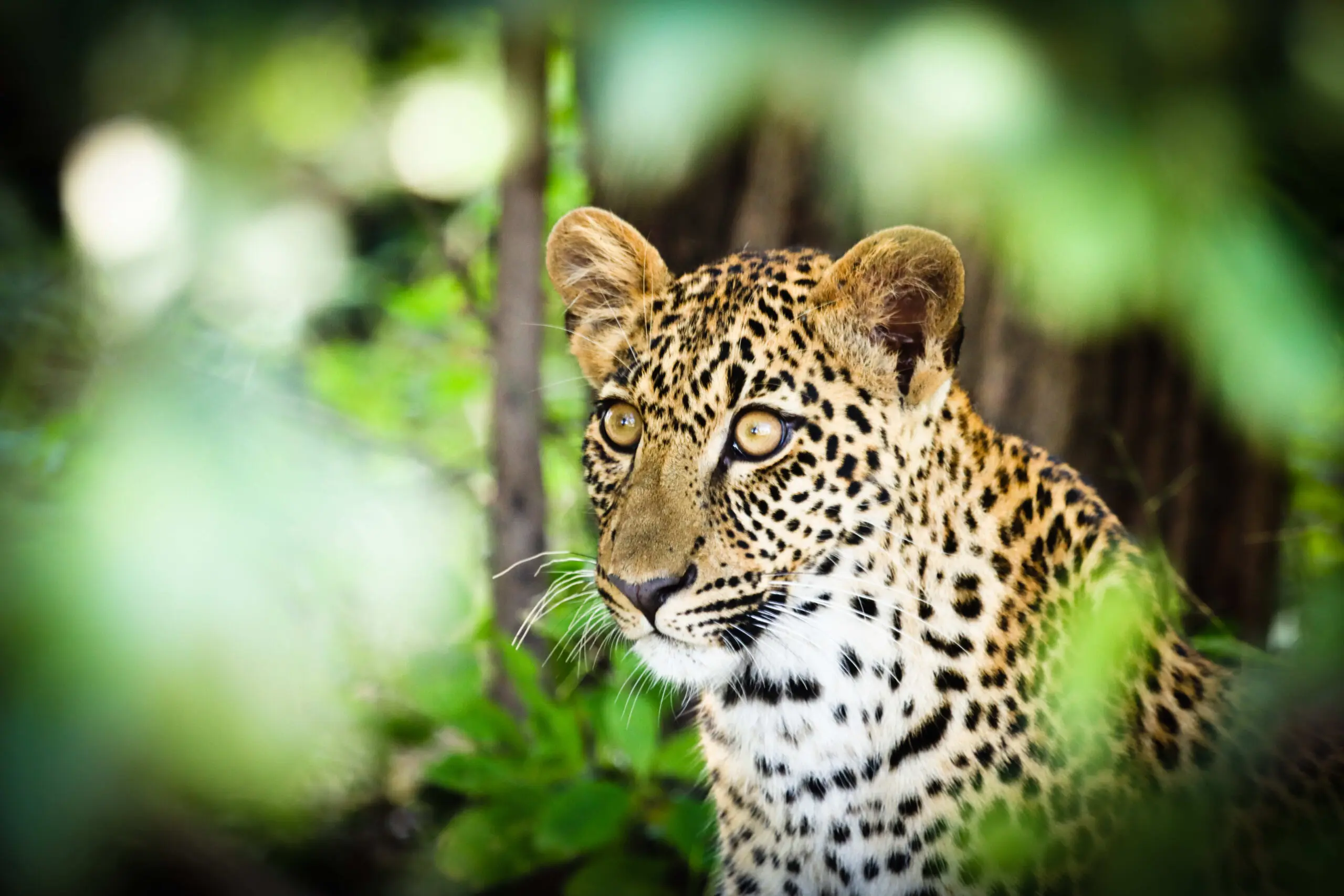
It’s animal inhabitants aren’t flashy, but they are unique. The Natal ghost frog has a limited and declining range in South Africa and requires clear and cold, swiftly flowing streams, fringed by dense vegetation. The Mariepskop dwarf chameleon and the Three Rondavels flat gecko probably evolved by adapting to the bio-geographically isolation from the surrounding area, while leopards, bushpigs and porcupines leave trails through the forest, but are seldom seen.
The rich diversity of the Blyde Canyon’s plants means that there are about 300 species of butterfly, including the Emperor Swallowtail, Foxy Emperor, Zulu Shadefly, Eyed Pansy and Queen Purple Tip There are hundreds of species of insects and spiders, the true number has not been established as many new species are discovered every year. A few include dragonflies, antlions, wasps, bees, golden silk orb spiders, ladybirds and dung beetles. In the high altitude grasslands near Graskop the endangered Blue Swallow annually visit the area to breed.Other species worth mentioning are African finfoot, White Backed Night Heron, Bald Ibis, Half collared kingfisher, Orange Thrush, Stanley’s Buzzard, Black rumped buttonquail, Striped flufftail, Buff-streaked Chat, Knysna Turaco, Purple-crested Turaco, Emerald Cuckoo and Golden-tailed Cuckoo,
A total of 94 reptile species have been recorded while the high plateaus are inhabited by Grey rhebuck, Mountain reedbuck, Baboons, Rock hyraxes, and Oribi. Hippo are present in the Blyde Dam. Common Reedbuck, Impala, kudu, blue wildebeest, waterbuck and Bushbuck inhabit the wooded Lowveld area whilst Red Duiker commonly occur in the lush Indigenous Forests of the Reserve. Predators such as leopard, genet, civet, andserval naturally occur throughout the Reserve. Aardvark, and porcupine are some of the nocturnal animals occuring. Smaller primates include both Lesser and Thick-Tailed bushbaby, Vervet Monkeys,and the rare Somango Monkey.
More about Peatlands
Peatlands are wetlands in which the soil is rich in organic matter. Peat is made up of partially decomposed, compressed organic material such as reeds and sedges, which forms in waterlogged environments as there is not enough oxygen for decomposition to occur at the usual rate. Peatlands are fairly common in the wetter northern hemisphere, but are rare in South Africa and cover only approximately 1% of the total wetland area across the country.
The high porosity and ‘sponge-like’ nature of peat allows these special ecosystems to capture and store high quantities of water from the surrounding catchment and release it slowly to downstream aquatic systems during periods of drought. Due to peat’s high carbon (organic) content it also acts as a natural purifier of water. Peatlands are known to play an important role in mitigating climate change, as they act as carbon sinks. Peatlands cover just three per cent of our world, yet they store nearly a third of all land-based carbon. This is twice as much as all the world’s forests. Once degraded by drying out, peat loses its structure and function, and the carbon captured over thousands of years can be released back into the atmosphere in a very short time.