IsiShweshwe material’s transition from the realm of work-wear to sought-after couture was unexpected but insistent. As South Africa embraced democracy and nation-building in the 1990s, the whisper of this humble fabric grew into a roar. Appearing first on the runways in South Africa, isiShweshwe was soon garnering global attention thanks to a number of designers who were able to reflect the complex relationship between fashion and identity in their designs.
“Growing up in the rural Eastern Cape, my mother was a dressmaker. As a young girl though, I didn’t like home-made things. I wanted a dress that was bought from the shop,” recalls fashion designer Bongiwe Walaza. Remembering a particular dress made by her mother out of isiShweshwe fabric, she describes seeing it as something traditional; “and I didn’t like anything that was traditional. I am still not a traditional person, but those memories evolved in me,” she explains. “It was like my mind woke up to the fabric’s potential.”
Today, Walaza is one of a handful of designers credited with putting isiShweshwe on the South African and international fashion map. sWith people from all walks of life embracing the trend, isiShweshwe is now an accepted part of the fabric of South African life. With the histories implicit in each pattern constantly retold through design, there is a continual conversation on the go.
Walaza first used isiShweshwe in a third-year design project with an Afrique-nouveau theme. “This fabric was the African thing that I knew the most. The theme made me feel proud. You think of the west when it comes to fashion. I had to make a statement with something that came from within South Africa.”
Although Walaza identifies isiShweshwe as something African, the fabric’s origins lie in Europe, with its roots possibly extending as far back as early Arab and Phoenician trade along the eastern seaboard before 2400BC. Known originally as indigo cloth, it was worn by slaves, soldiers, indigenous African women and Voortrekkers.


As part of the imperial, colonial endeavor of the 18th and 19th centuries, it was exported to southern Africa by European textile manufacturers. Created using a block and discharge printing style on indigo cotton fabric, its distinctive characteristics began to evolve, and with these, its links to South African identities.
“There are moments in which identity becomes conveyed through dress,” suggests Professor Juliette Leeb-du Toit, who has spent decades studying isiShweshwe. Recognizing these moments– from isiShweshwe’s role in the imperial colonial endeavor, to the wearing of the cloth in the 1960s, 70s, 80s and 90s – is important for understanding the fabric’s enduring appeal in South and southern Africa.
One thing that hasn’t changed is how isiShweshwe is made. “Authentic isiShweshwe looks, feels and smells a certain way because of the manufacturing process,” explains Helen Bester, Design Manager at Da Gama Textiles, the company that purchased the sole rights to own and print the popular Three Cats range of designs in 1992. “We even shipped out all the copper rollers used to make the fabric from Britain to the Zwelitsha plant in the Eastern Cape,” she explains.
Today, Da Gama is the only company in the world that produces and starches this fabric
in the traditional way. After washing, the stiffness disappears to leave behind a soft cotton fabric. The origins of the fabric’s pre-wash stiffness and smell lie in its history, when starch was used to protect it on its long sea voyage to South Africa. “We tried not using the starch as there is no longer a need to, but our customers still want to feel it,” says Bester. The fabric is also still folded and baled, even although rolls would be easier.
Da Gama also mainly use designs from what they refer to as the ‘Three Cats bible’, which came over with the copper rollers in 1992. These are added to from time-to-time when an occasion warrants it, like the Nelson Mandela print that they did as a once-off.
“In about 2003 we introduced pink, orange and purple alongside the traditional indigo, red and brown designs and we haven’t looked back,” says Bester, explaining Da Gama’s decision to increase its range of colours. She notes that for events like weddings, traditional hues still appeal, signifying deeply held ideas about marriage and proprietary. The new colours, however come out in streetwear and high fashion products.
Imitations from China and elsewhere abound because “isiShweshwe is not a copyright name to Da Gama. It is a concept in design,” says Rees Mann, Director of the Fashion District Institute. He’s noticed however that although people have experimented with different brands, they often go back to the original; “the Three Cats brand is very strong.”
The fabric’s popular appeal is something designers like Walaza can really relate to. “I love how I can mix and match it. It brings out the creativity in me,” says Walaza, who was an engineer before entering the world of fashion. “As much as it is something old, it’s become timeless. It remains a traditional cloth, but we have liberated it.”
While the fabric’s fundamental characteristics are unchanged, this idea of liberation helps explain isiShweshwe’s enduring appeal. It has transitioned from the realm of rural wear into the world of contemporary design, coming to signify something new in the process. “I love seeing the return to a more broad-based use of the fabric. It’s part of my personal history and our national history,” says Leeb du-Toit.

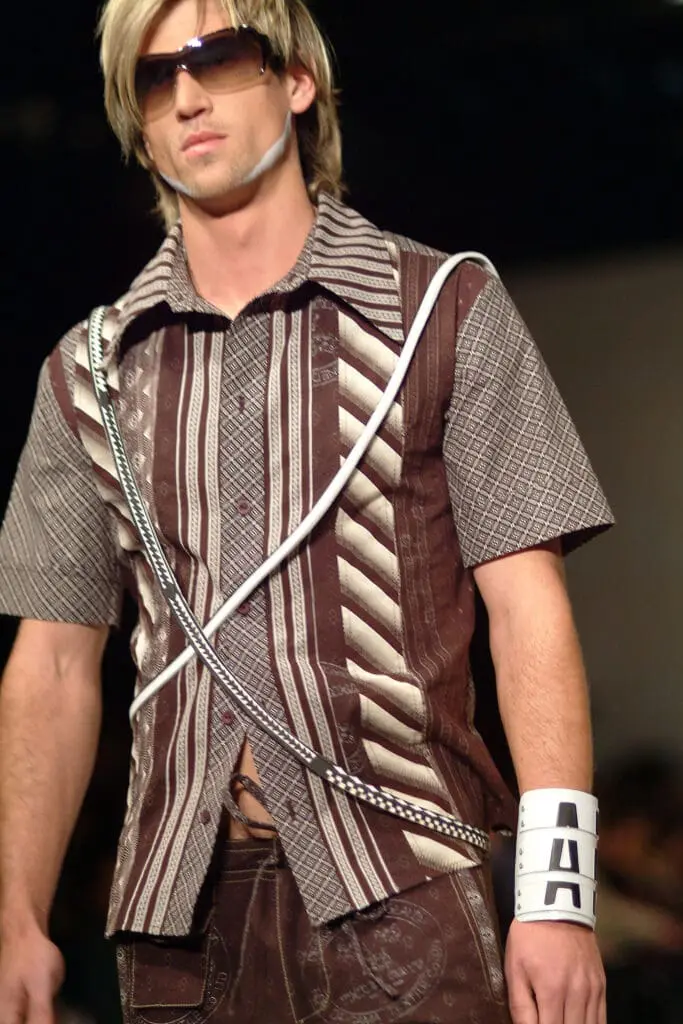
The success of one print or another is always a matter of personal appeal. “Just sit on Diagonal Street in Johannesburg and see what the buyers choose,” she confirms. “No one can impose a product on the market without the consumer’s desire and choice determining its success. That’s what’s vested in the use of isiShweshwe now – women’s ability to choose,” she says. Popular designs also get street names like China Eyes, Sweets, CDs and Dreams.
Like Walaza, Leeb-du Toit’s own interest in the fabric is linked to her childhood. “It’s emotive for me. I was raised by African women. My interest comes from that vision of my care-givers as a child. It is a very complex affinity.” When she discovered that settler and boer and African women all wore the cloth at the same time, in a moment of a shared history, followed by the gradual unraveling of this, her fascination with the fabric grew.
“In the present moment, though isiShweshwe does signify South African-ness,” says Leeb du Toit. It is linked to various moments in South Africa’s history and to particular places too. “People all over the country use the fabric in different ways; makoti (Xhosa brides) have their traditions, so do Swazi men and the people on the street in downtown Johannesburg,” she observes.
“In the 1990s, we began to see regional and cultural continuity as high fashion began to look at ‘ethnicities’. There were debates about what messages were being conveyed by the decisions of fashion designers and isiShweshwe became part of changing dynamic attached to aspirant nation-building. It moved from a rural, to an envisaged national identity,” she explains. The result is a cloth with a deeply rooted colonial history, “but which has become indigenized to the extent that its colonial referencing has become effete,” says Leeb-du Toit.
While this is contested by some designers and academics who still recognize oppression in its patterns, “[isiShweshwe] can be seen as a product that reflects a shift in power and rurality, although many contemporary designers may not be aware of its complex history,” she notes. What is indisputable is the isiShweshwe is completely imbedded in South Africa’s design history, “showing incredible shifts, but also incredible continuities”.
These shifts and continuities can be seen in the piles of fabric on sale in general dealers all over southern Africa and in work of designers like Amanda-Laird Cherry, Palesa Mokubung and Walaza. “It’s about what becomes attached to it – physically, culturally and even spiritually,” says Leeb du Toit.
“It has become a classic fabric and it’s popular because of how we use it,” agrees Walaza. Each intricate print or beautiful panel tells a story, and perhaps more than one. They’re Walaza’s stories, Leeb-du Toit’s stories and the stories of the millions of men and women who’ve come into contact with isiShweshwe. And today, the fabric that whispers sometimes speaks louder than words.
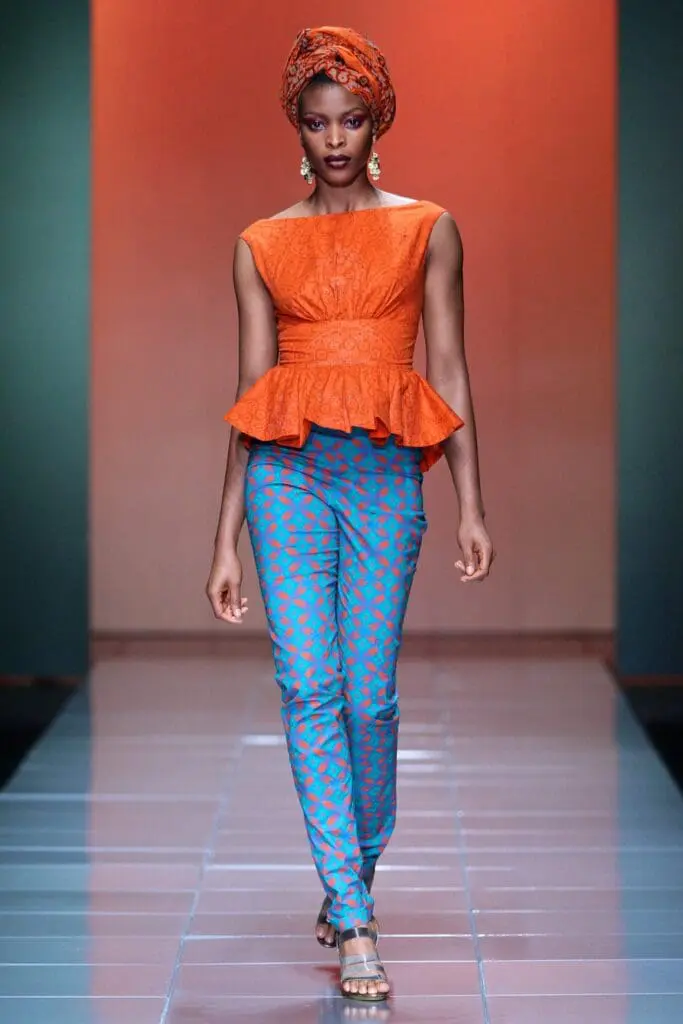

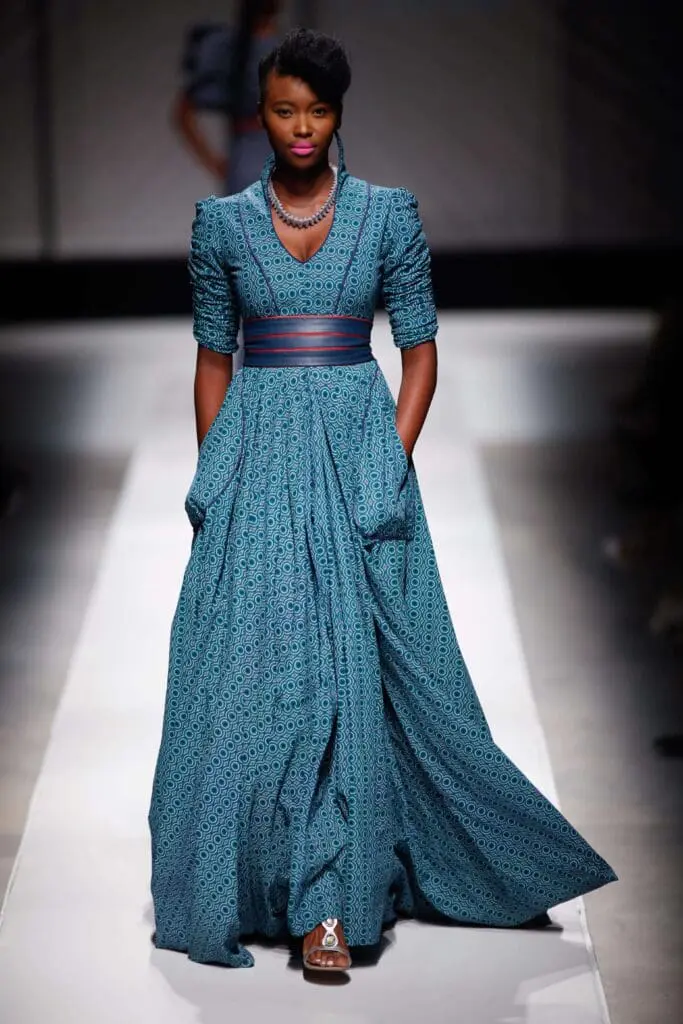
Did you know?
In the early 1840s French missionaries presented Moshoeshoe I with a gift of indigo printed cloth, learning to the term shoeshoe or isiShweshwe.