“When I started working with communities through my role at the Southern African Wildlife College, I assumed the people I’d be working with would see my work in the service of conservation as a good and right.”
Facing up to the flaws in this assumption was one of many lessons that Sboniso Phakathi, now Project Leader of the College’s RISE (Rural Initiatives for a Sustainable Environment) Unit, had to take on board in his personal and professional journey with the SADC accredited conservation training institute, which is based near the Orpen Gate in the Greater Kruger National Park.
Tall, approachable and instantly likeable; Phakathi had to dig deep to connect in a meaningful way with the communities living adjacent to the Kruger National Park and other protected areas. As conservation in South Africa begins to moves away from a purely protectionist model, his pioneering role is to collaboratively find new and sustainable ways for communities to be involved in and benefit from conservation.
“The fact is, we don’t all see conservation the same way. And I don’t just see myself as a conservationist,” says the ? year old, who has spent countless hours pondering the values that underpin this broad, evolving and sometimes contested term ‘conservation’.
He wasn’t always so introspective, as a child growing up in KwaZulu Natal, spending time in nature fed his curiosity, his sense of adventure and his friendships. “There was no barrier between us and the natural world,” he recalls, but he’d never seen working to protect it as part of his vocation.
“I am interested in humans, and I want to understand the way we think and how we make decisions. On the other side, I am intensely interested in the natural environment, it’s a beautiful, extraordinary place and wildlife is part of it,” he explains.
Leaving Pietermaritzburg for a work experience opportunity in Hoedspruit changed that, as he found his way back to the small Limpopo town in 2008 to begin his career in conservation after an adventurous two years delivering yachts to exotic ports around the world.
Initially working in anti-poaching, he soon realised that daily patrols in big five areas weren’t for him. ”Fear crept in. I panicked being in the bush. At the same time, we were pulling up all these snares and seeing signs of infiltration and we knew that poachers were out there.” He saw his first rhino carcass in 2010 and “I couldn’t understand the violence and brutality,” he recalled. A chance meeting with Paul Jennings set him on a ?km journey to raise awareness about rhino poaching.
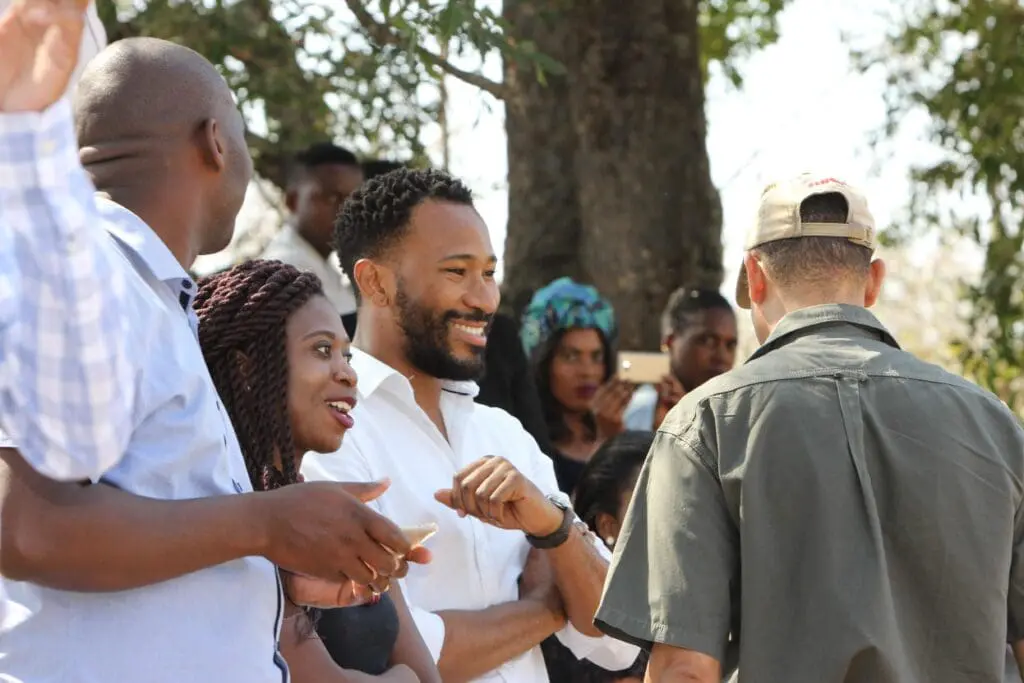
“It was also an internal journey,” says Phakathi, whose meetings along the way, with everyone from the notorious Dawie Groenewald, to the legendary Dr. Ian Player, made a lasting impression on him.
“It was an amazing moment in my life to meet Dr. Player. This person had dedicated his life to conservation, advocacy and relationship building. He knew the importance of engaging communities to attain conservation goals before it became more mainstream. He told us stories and being Zulu, I wanted to hear about the Zulu men involved…”
When he got back to Hoedspruit, Phakathi took Player’s advise to “go and do something!” literally and began working intensively in environmental education. It wasn’t enough though. Something was shifting in him; he’d felt it prickle a few times; a nagging sense that there was more to him, more to conservation and more to the work he was doing that was being given space within the existing conservation NGOs. “The work very quickly became a ‘protect’ the rhino story, but we needed to equip people with more than that,” he says.
Having worked with youth, farm workers and other people on the margins of mainstream conservation, taking on a community liaison role was a logical career move. It quickly dawned on him though that for all his time in Hoedspruit, knew nothing about the area, the community and their feelings.
“I encountered conflict after conflict after conflict,” he recalls. He had to dig deep and try to understand where the anger was coming from. “I found myself asking, am I black enough? Is conservation too eurocentric? What attitudes does conservation have towards people? What messages do conservation practices send? Who are we leaving out of the decision making?”
Thinking about these deep questions signalled an internal shift in Sboniso, but also reflected a broader shift in the conservation narrative that’s been taking place in recent years. “For a long time, conservation in South Africa has excluded people, but today conservation management leaders should be taking cognisance of social goals and processes outside of conservation. Today we’re much more focused on people and how they fit into the picture; but there’s a long road ahead,” he warns.
The biggest lesson he’s learnt is to never assume he knows a community’s issues. “Ask, and seek first to understand before imposing solutions,” he cautions. And then engage the person you see as your adversary or who gives you the biggest amount of problems, because you will learn more than you could ever imagine,” says Phakathi.
Despite the challenges he encounters as he and his team try to build bridges between people, spaces, ages, disciplines, races, and values, he’s optimistic that the future is a hopeful one. The crisis we face in conservation – from habitat lose to wildlife trafficking, to the threat of extinctions – are also a unique opportunities to reassess conservation business as usual. “This is the moment to rethink our practices and have a different conversation about conservation, because we’re setting the future in motion,” he says.
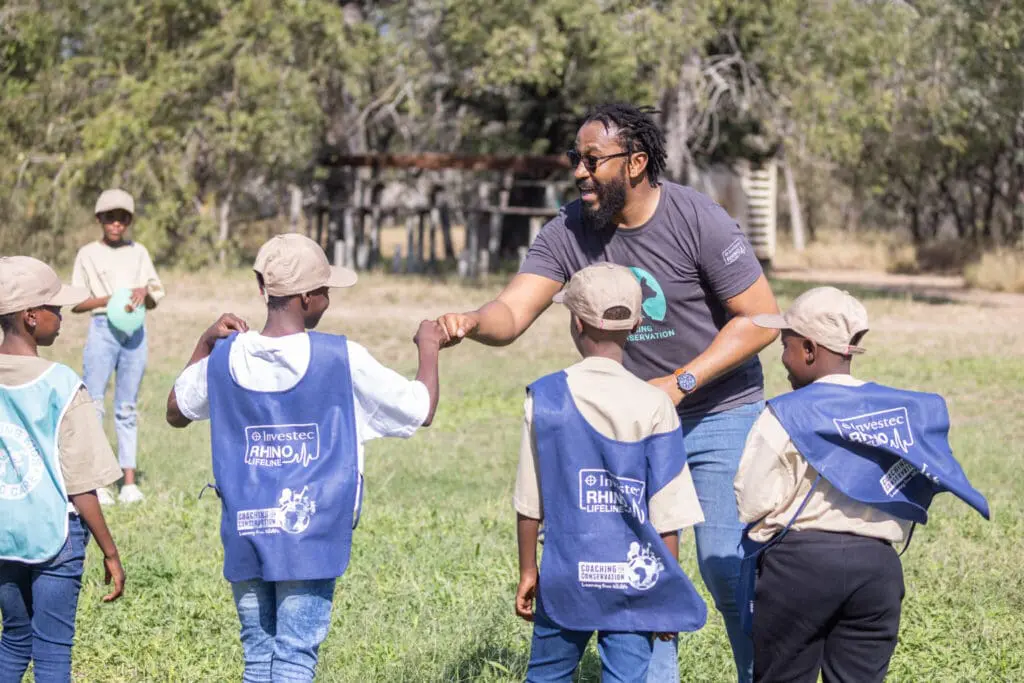
Having recently returned from the MAVA Leaders for Nature Academy programme where he was one of the final 15 pair selected to attend, along with Clive Poultney, who is contracted to the College for Business Development, Phakathi has a new perspective on the need to leadership in conservation, and the role he can play.
“We’re like a puzzle, introducing more complexity may be more work, but it also means you see more and more of the whole picture. Conservation needs to accommodate different thinking, different lived experiences, and different disciplines.”