This evening, as the billows from the 12th class 204 locomotive mingled with the spray from the world famous waterfall, so the past mingled with the present. For an extraordinary moment on that bridge, I travelled through time.
Steam train excursion to the Victoria Falls Bridge
“The years I spent in Livingstone were the best of my life,” said my father, Cedric Tipping-Woods, as we disembarked the beautifully restored lounge car run by Bushtracks Africa and stood on the wetly gleaming bridge that links Zimbabwe and Zambia at what is one of the world’s most spectacular border posts. Vendors tried to sell us copper bracelets and the last few daring individuals lined up for the final bungee jump of the day.
This return to Livingstone with my father, who had left more than 50 years before, was a journey of remembrance, but also one of discovery. My grandfather, William Tipping-Woods, had worked on the railways in the fifties and sixties as a fitter and turner and I grew up with stories of exhilarating swims above the Victoria Falls, boating and fishing on the 4th longest river in Africa and of these machines that chugged and swayed over railway lines that had been built at an extraordinary speed.
“The team responsible for the railway line we’re on were record breakers, laying a mile a day for 300 miles. They got to the bridge before the bridge got here in 1904. By then, they were 100 miles north… That’s the kind of people we had out here,” explains Peter Jones, historian and owner of The River Club, an old farmhouse-turned-lodge which is part ode to a bygone era, part celebration of all that Livingstone has to offer travellers today.
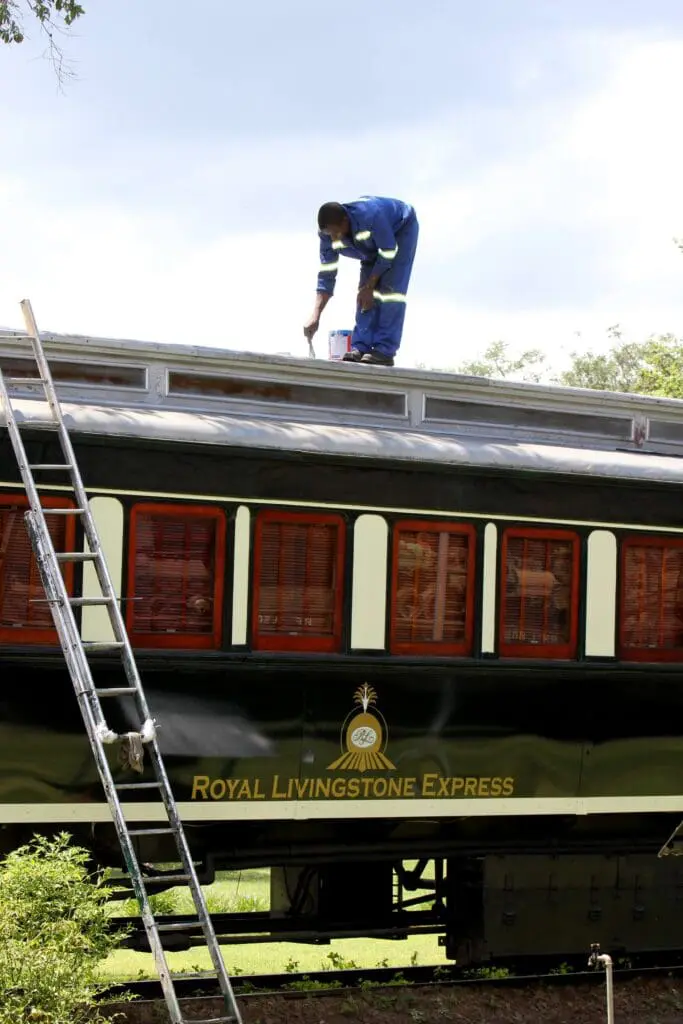
Back on The Livingstone Express, while the setting sun lit up the spray in rainbow hues and up to 700 000 cubic metres of water per minute thundered more than 100 metres into the gorge below, locomotive driver Lamick Sambulo let my dad toot the horn. “I have wanted to do that since I was 11 years old,” he said.
A town tour
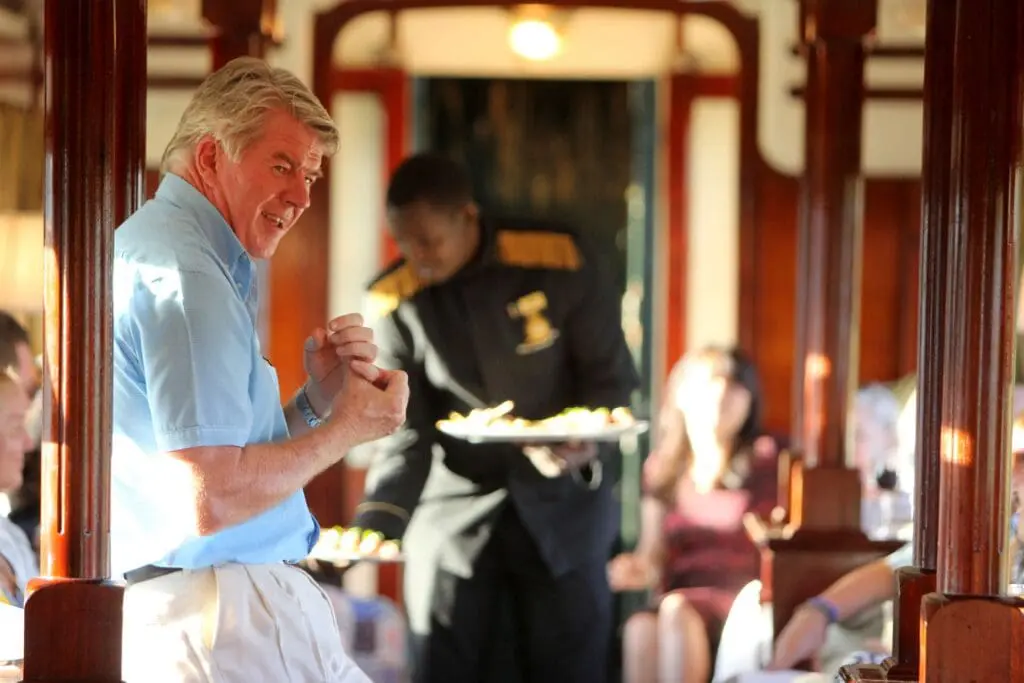
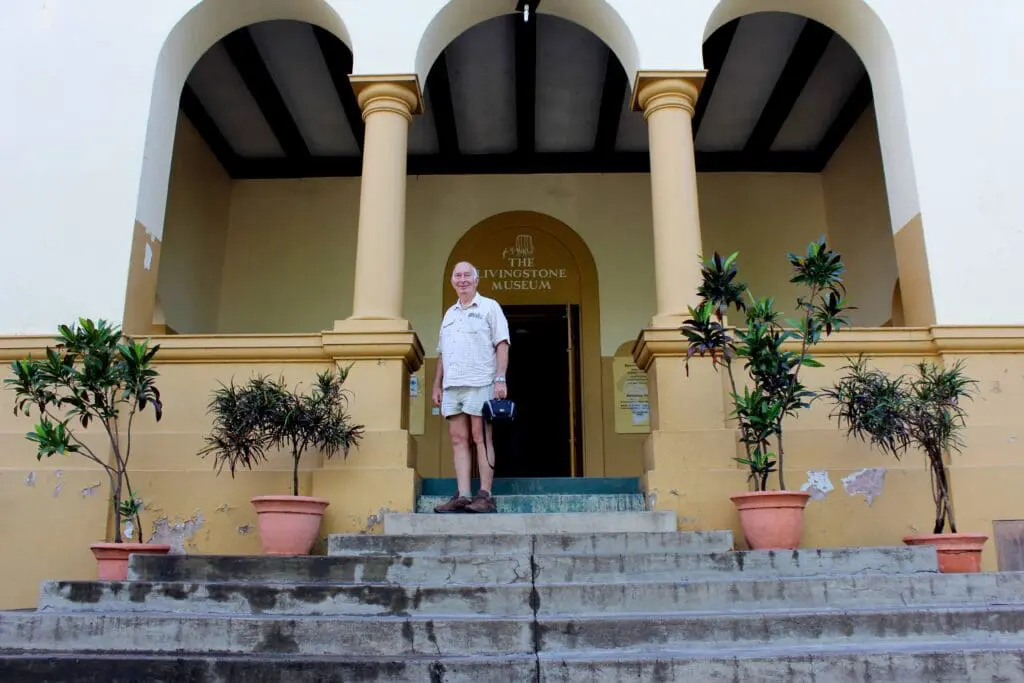
Prior to our nostalgic journey on Bushtrack Africa’s Royal Livingstone Express, we’d spent the afternoon exploring the town’s streets, searching for my father’s old house on what used to be Lockwood Road, now named Kabompo Road. We visited the Livingstone Museum, where Ethel Mulenga let us in for free because my dad had worked there as a child. We found the shop where he bought his first bicycle, which still bears the name Iljon, although the Iljons – one of Livingstone’s many prominent Jewish families who found refuge here in the the late 1890s and early 1920s – have long since left town.
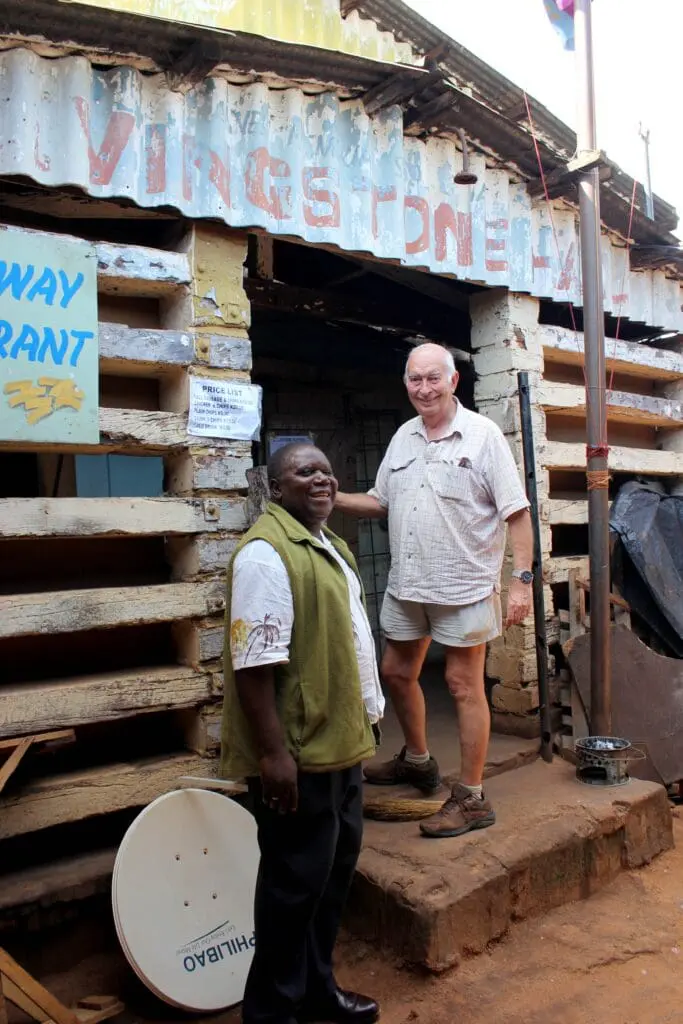
Later we wandered past the old cinema (circa 1931) and various other landmarks which are interspersed with the the hustle and bustle of modern Zambian life. We even found the old Scout Hall, possibly built from railway sleepers from the Mulobezi Sawmill further up the railway line. The hall is surrounded by an informal market now, where you can buy anything from kapenta (small dried fish) to hair braids. I bought some of the beautifully patterned wax-printed Chitenge fabric that Zambian women wear and we chatted to David Kwalela who now runs a school in the hall where my father spent may happy hours as a cub scout. Eneless Mwanza is one of his students, and hopes to get a job in what is now the town’s primary industry; tourism; which even in a newspaper article from 1907, was lauded as the future of the town.
The Victoria Falls Bridge Tour
Central to this imagined future was the Victoria Falls Bridge, that audacious spray-drenched link in a rail network originally intended to join the coalfields of Hwange with the copper deposits of Zambia as part of Cecil John Rhodes’s master plan to link the Cape to Cairo by rail. The intermingling of colonial ambition and modernity is evident in every facet of the history of the bridge. Whatever role it played in the colonial imagination, it’s used daily by tourists, travellers and truck drivers crossing between the two countries.
As I climb a steep and slippery ladder to the latticed steel walkway below the bridge, a rainbow arcs the lush gorge and the steelwork drips with spray. Gazing between the swirling water below and the giant steel structure above, I’m glad of my safety harness. “They built the whole bridge upside down in England and then disassembled and shipped it to the Mozambique port of Beira and then transported it on the newly constructed railway to the Victoria Falls. It came together in spectacular fashion when the hot metal contracted in the cool night air on March 31,” explained Kim Adams, from Shearwater Victoria Falls, his hand resting on the vital join in the trussed arch design, which allows it to expand and contract according to the heat.
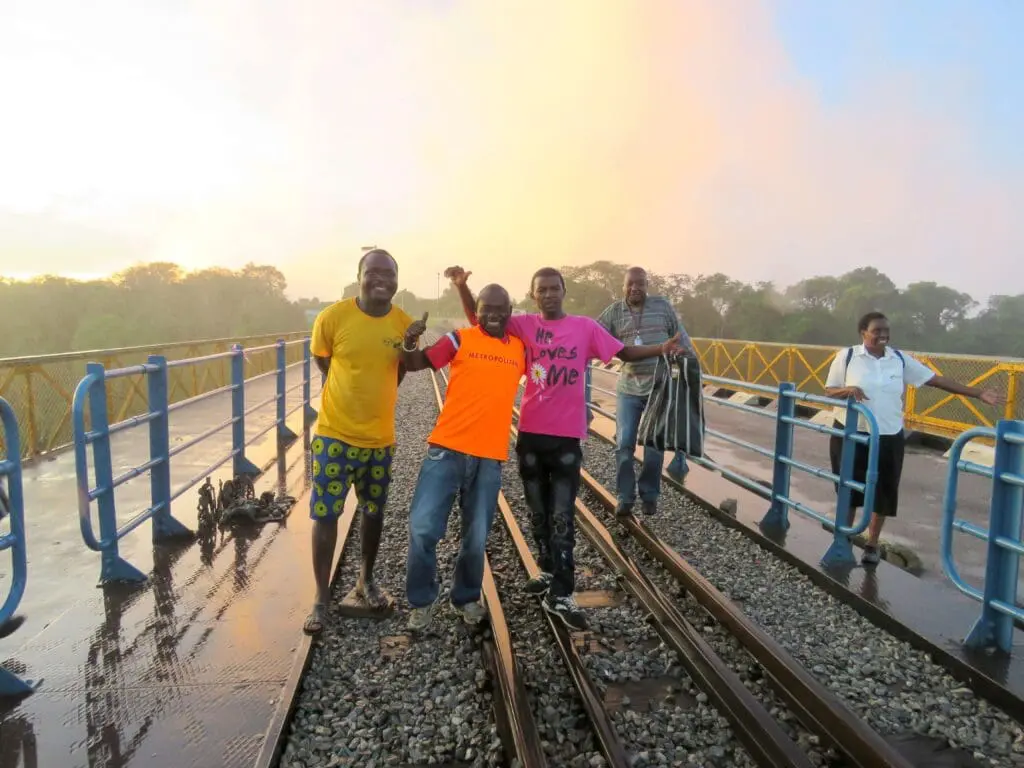
Now, the bridge is at the heart of a range of adventure activities; some of the world’s best white water rafting trips which leave from the boiling pot, bungee jumps, gorge swings and more. “They must be bloody mad,” said my dad watching another person take flight.
Livingstone Island
Swimming on Livingstone Island though was something that people in Livingstone have always done. “It’s part of local culture,” says Tongabezi Guide Alfa Omega, guiding us to the very edge of the Victoria Falls, with the powerful waters of the Zambezi swirling around us just seconds before they drop 100 metres into the gorge below, “a scene so lovely it must have been gazed upon by angels in their flight.” These are the words immortalised by David Livingstone when he first viewed the falls from this very same vantage point on 16 November 1855.
The story of the famous doctor, explorer and missionary, is still very much a part of the town that grew up around the falls and took his name. While we arrived on the island in a twin engine motorboat, Livingstone arrived in a dugout canoe to view the waterfall that his Kololo guides from further up the Zambezi knew as Mosi-oa-Tunya; the smoke that thunders. He renamed the waterfall after his British queen. Today, both names for this World Heritage Site are used.
The Toka and Leya people from the villages around the falls consider this island, and the pool at the foot of the falls, to be holy places. For hundreds of years they have come here for this baptism of spray, to pray and to perform their rituals confirm Omega. In the dry season, families (and elephants) would also walk over to the Island to picnic under the lush trees, dripping in fruit beloved of people, monkeys and pachyderms alike.
River Cruise
Later, drifting on the river for a sunset cruise from the River Club, away from the thunder and bluster of the falls, the water reflects the changing colours of the sky, ranging from wine-tinged shades of indigo to rippling, liquid gold. I realise that while it was the railways that brought him here, it was the place – the food, the river, the wildness – that captured my dad’s heart and his imagination. And the steam train’s whistle as it journeys over the bridge summons all those memories and more, of a place that always changing, but also still the same.
Good to know
Where to stay
The River Club is unsurpassed for its collection of historic Livingstone and Zambian memorabilia. The beautifully restored farmhouse and private suits are located 18 kilometres upstream from the town of Livingstone, on a high bank that provides stunning views over a sweeping bend of the Zambezi River. Owner Peter Jones is Livingstone’s local historian.
The Royal Livingstone Hotel is within easy walking distance of the Victoria Falls, located in the Mosi Oa Tunya National Park and World Heritage Site, with free-roaming antelope and plains game and year-round views of the spray from the falls.
For tours and packages click here.
Activities
Activities like white water rafting and visits to Livingstone Island are seasonal due to changes in water levels. Visit here for rafting and other adventure activities and contact the exclusive operator for Livingstone Island Tours for more information.
For an experience on The Royal Livingstone Express, visit Bush Tracks Africa.
For an historic bridge tour, visit Shearwater Victoria Falls. Note that for activities on the bridge, you’ll need to leave your passport at Immigration.
Visit The Elephant Cafe for a truly unforgettable meal (and a thrilling jet boat ride to reach it) and to learn about how they are trying to sustainably support a herd of rescued elephants.
What to bring
A rain jacket can be handy, as can a dry bag for your camera when the Victoria Falls is full! Livingstone is also a malaria area, so consult your doctor before travelling.
Safety
Never walk around with food as the baboons are habituated to people.
Note the vendors on the bridge can try and charge up to 200 times more than goods cost in town e.g. a copper bracelet for 300 Kwacha that was sold in the shop at the Livingstone Museum for 15 Kwacha.