The long-tailed cassias are flowering as we head into Kruger National Park’s Orpen gate. There is a light mist lingering in the tall grass and a teasing coolness in the air. It’s exactly the same season as Toronto-born Anne Innis Dagg’s first visit to South Africa almost 60 years ago, when she arrived from Canada as a student on a mission to study giraffes in the wild.
“Look!” she exclaims as we spot a small group browsing on some tender acacia leaves just a few kilometres from the gate. “Aren’t they lovely? Just as I remember them!” Anne loves giraffes now as much as she did then, when she was the very first person to study them – or just about any other large mammal – in the wild.
“Of course, science has moved on so much from then, but at the time, there was no protocol for that kind of research. I know of one study of red deer in Scotland that predates mine. I just thought I’ll see what they do and went in and watched them,” says the zoologist and feminist with a modest shrug as we continue along the H7, in search of more giraffes.
Despite being one of the world’s foremost experts on giraffes and the first person in the world to study them extensively in their natural habitat, she hasn’t been back to South Africa since completing her field work on a farm near Hoedspruit. In the Lowveld to attend a symposium on giraffes, Anne is also the subject of a documentary about her life and research. Along with her academic work and most recently, her 2014 comprehensive review of giraffe research, “looking up everything that had ever been written on giraffe,” Anne wrote about her time in the Lowveld in her book, Pursuing Giraffe, which was published in 2006.

Watching the giant ruminants, Anne’s joy is unfettered. “Look how their necks move with each stride. They don’t do anything fast. They have this grace about them…” In the clasp of her hands and the intensity of her gaze, I catch a glimpse of the girl who saw her first giraffes aged three at the Brookfield Zoo in Chicago and went on to defy the status quo and the odds to become a pioneering researcher in field of mammalian behavioural science at the age of 23.
When she made the long, solo journey by ship from Canada to South Africa, she didn’t see herself as in any way extraordinary. “I knew what I wanted to do and I did it. It seemed very sensible at the time,” she states. This is despite the fact that she had to hide her gender in her letters to South Africa trying to secure a study site for her passion project!
Although not nearly as well-publicised as threats against charismatic species like rhinos and gorillas, recent research suggests that giraffe numbers are being negatively impacted by habitat loss, human – wildlife conflict and poaching, while at the same time, scientists are learning more and more about their emotional complexity. “When I studied giraffe in South Africa in the 1950s, and co-authored a scientific book about them in 1976 and 1982, I never imagined that they might become endangered
or even that there would be huge interest in them in the coming years,” she notes.
While southern giraffe populations are fairly heathy, some of the 9 subspecies (the rest of which occur north of Zimbabwe) are in trouble, threatened by bush meat poaching and habitat loss.
Unlike some other early large mammal researchers, Anne never became particularly famous, despite her extraordinary work. Talking to her though, it’s clear that she was never interested in fame, just in good science. “I have the original notes I took from my very first day in the field. When I saw my first giraffe, I walked towards them and they looked up at me and looked a little confused. And I thought this isn’t good, because I’m learning how they react to me and I’m affecting what they do,” says Anne. After this first realisation her field work improved. “I made sure they never became habituated to my presence and I kept a good distance,” she explains.

In her eighties now, Anne is slim and agile, navigating the game drive vehicle with ease and snapping away at the birds and animals we see. “What’s that one there,” she asks, looking at a Burchell’s coucal basking in the sun. “Oh a kudu – I just love them…” The giraffe we see are strangely familiar to her despite the time that’s passed. She notes what they eat as a long purple tongue selects some tender green acacia shoots. During her field work, she observed the animals eating from about 40 different trees – knowledge of their menu has expanded over the years to almost 90 species. “They are unlike zebras or any other animals I can think of. They seem so curious about people,” she notes as the bull peers at us from under his long eye-lashes. “Other animals don’t do that, do they?”
Coming back to the Lowveld has been emotional for her. “I went and got my PhD (on the gaits of the giraffes and camels) at the University of Waterloo, Canada, but as I was a woman it wasn’t taken seriously.” As the subject the documentary, she’s reliving the adventure and her achievements, but also the memories of a sexist academic world that, for many years, ignored the contributions of women scientists.
In this environment, with Anne relaxed and full of enthusiasm for everything we see, it’s hard to picture her taking on the establishment in Canada, where she earned a reputation as a formidable feminist. “My husband was good about it, he never complained a lot. He must have felt ill sometimes at the stuff I was doing to change the status quo…” she laughs. “My aim was to have women equal to men and that academic work be judged on what a person did and not on their gender.”
One of the most exciting developments in current giraffe research, according to Anne, is the fact that “we think they have infrasound, which means that somehow they can make some noises that we can’t hear another animal a kilometre away can,” she explains. Their complex social structures are also still being studied, although behavioural research as Anne practiced it is no longer common. Research methods are not the only things that have changed since her last trip to Kruger. “To see black and white people actually talking together is just wonderful because that wouldn’t have happened before,” says Anne, who was deeply affected by her social experience in apartheid South Africa; “it just didn’t make any sense.” Also, work by women scientists is better received today than her research initially was, although there are still hurdles and “nothing will change if we don’t fight it.”
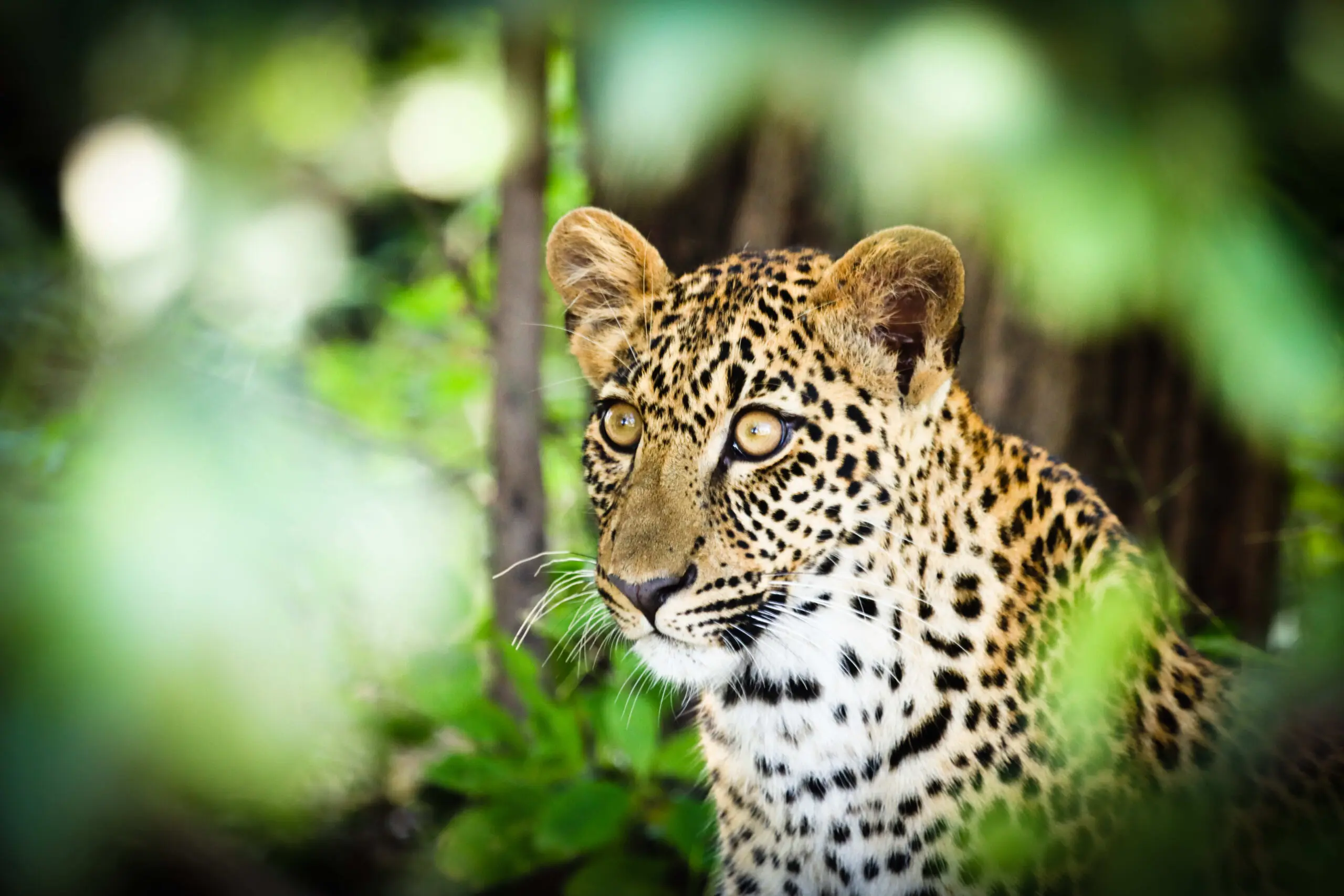
Enjoying the sight of a leopard lazing in a tree, meeting a bachelor group of elephants on the road and seeing hooded vultures soar, Anne’s delight is contagious. It’s as though being here in Kruger represents a small reward for a lifetime’s work. We stop at N’wanetsi for lunch observe a small group of giraffes at the waterhole down below. While two males jockey for status, she explains how their small horns form from cartilage and recalls the first time she watched their choreographed combat, wondering what was going on.

Later on in the day, Anne’s mood turns contemplative. Her joy at being in the bush and sharing her story is coloured with emotion about the years that have passed since her last visit. She credits her time in South Africa for making her more confident and sure of herself and what she wanted to do as a young scientist. As a leading expert on the species, Anne is passionate about giraffe conservation and has never stopped working on the issues that interest her as a scientist and feminist.
“I think I’ve published something like 20 books, 60 papers, so that makes me feel good,” she says when I ask her what she’s most proud of. She wonders why giraffe perhaps haven’t captured people’s imaginations the way they captured hers. “They are so stately, so regal,” she muses as we gaze a female giraffe whose dark chocolate markings are catching the last of the light.
When I asked her about being referred to as the “Jane Goodall of giraffe research” by the likes of Queen’s University giraffe researcher John Doherty, Anne just shrugs and ignores the question, holding the scarf dotted with giraffes that she’s been wearing all day. She’s said all she needs to say earlier. “I just love them. I just love giraffes.”
Anne’s 2014 book Giraffe. Biology, Behaviour and Conservation, draws together the latest giraffe research into one resource on the biology, behaviour and conservation needs of giraffe. Her memoir “Pursuing Giraffe” is available on Amazon.