The trumpeting elephants stopped us in our tracks. We squeezed our brakes and froze, following the signal from the guides. The adrenalin was pumping as they quickly assessed the situation. The enormous pachyderms were on the right and left of the dirt road ahead. The closest was just 15 metres from the lead vehicle guiding the mountain bikers through this section of the Timbavati Private Game Reserve. Suddenly sitting on a bicycle felt like a very vulnerable place to be.
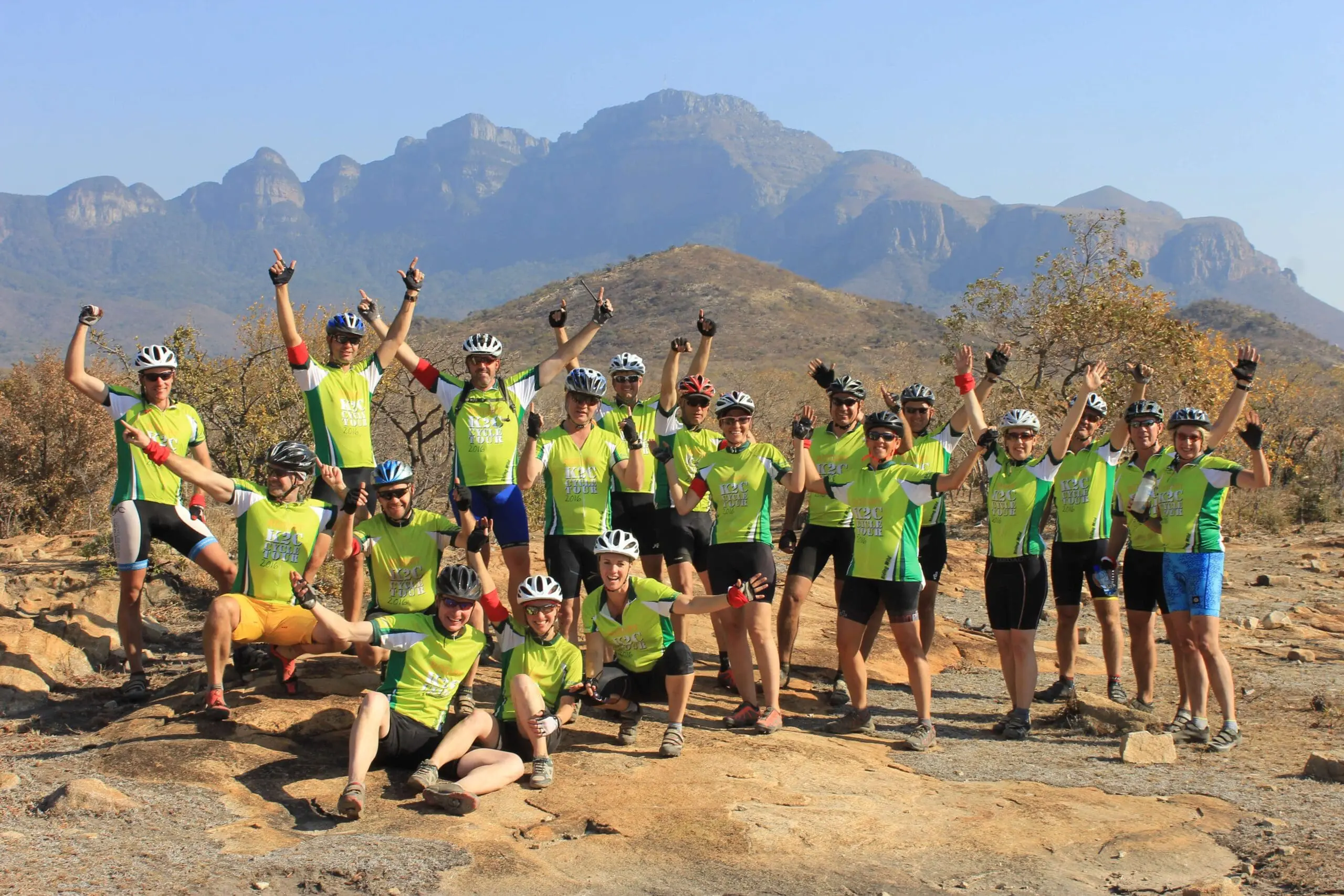
As the day progressed, the 100 cyclists taking part in the annual Rotary K2C Cycle Tour encountered more elephants, rhinos, buffalos and plains game. The thrill didn’t wear off as we pedalled through 4 ‘big 5’ reserves in South Africa’s Limpopo Province, cycling from Kruger to the foot of the Blyde River Canyon.
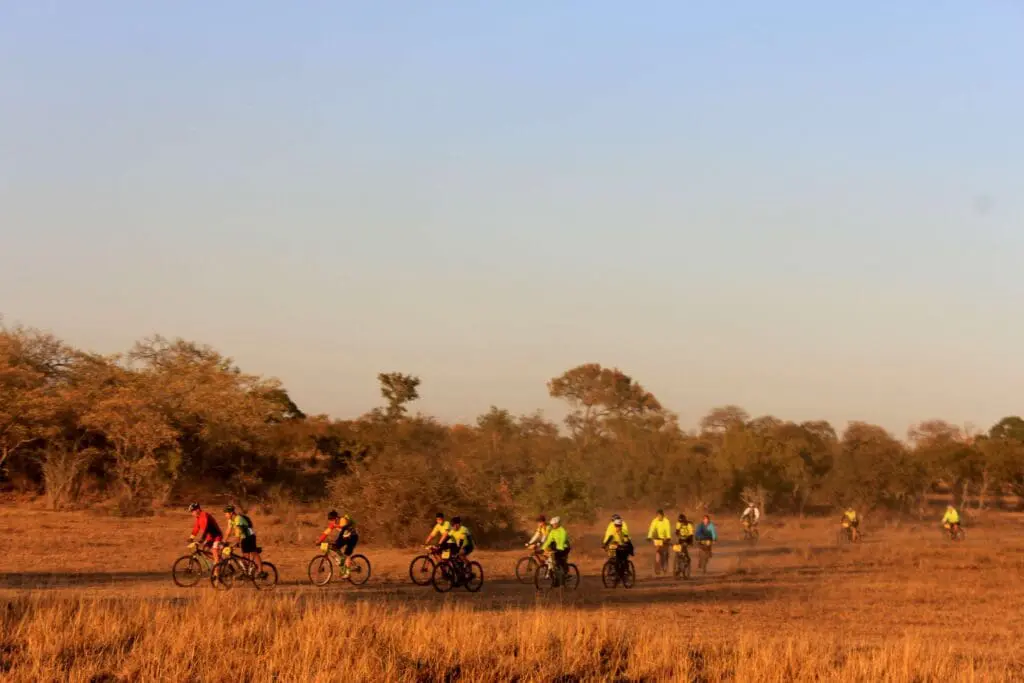
We had set out early from an unmarked gate into the Timbavati, close to Kruger’s Orpen entrance, each peloton cast in gold and trailing clouds of light. It was a couple of hours before the sun burnt off the chill of the July morning. As we paused for that first herd of elephants, our breath pooled in the cool air.
They were a relaxed group, even the cheeky youngster who let out the initial squeal. Branches broke and grass crunched as they quietly communicated in low rumbles, unfazed by our silent presence. A tiny baby ran to catch up with its mother, trunk and tail out, ears wide. We watched a few more members of the herd cross the road.
After about 15 minutes, guide Pete Dippenaar gave the signal to move on. The herd was spread out to the left of the route and we had more glimpses of grey as our group of 19 cyclists passed, hearts pumping from more than just the pedalling.
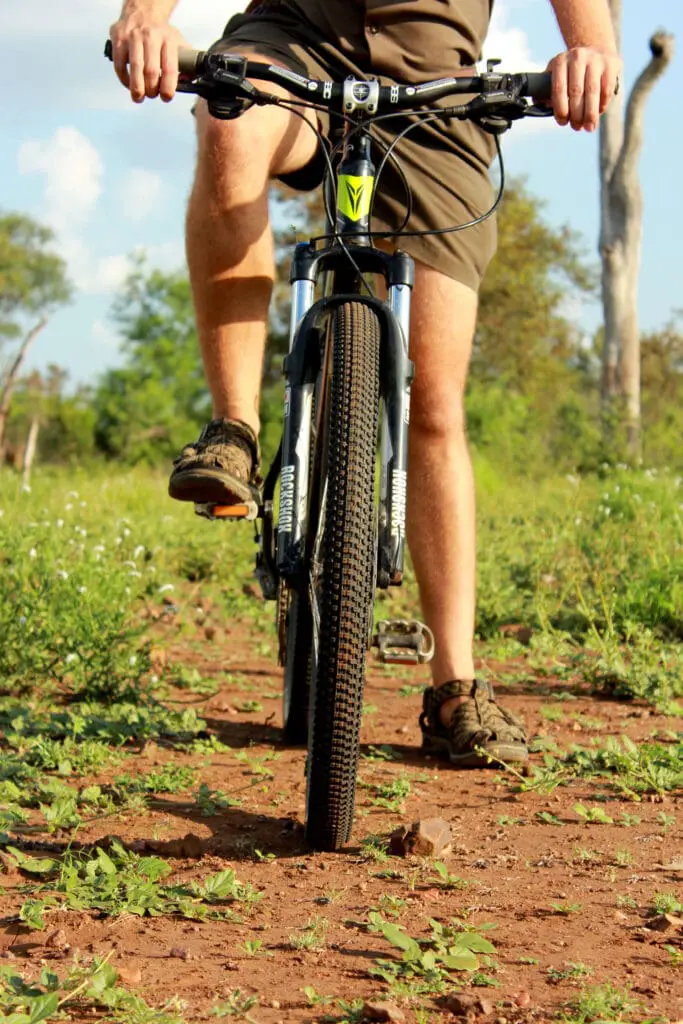
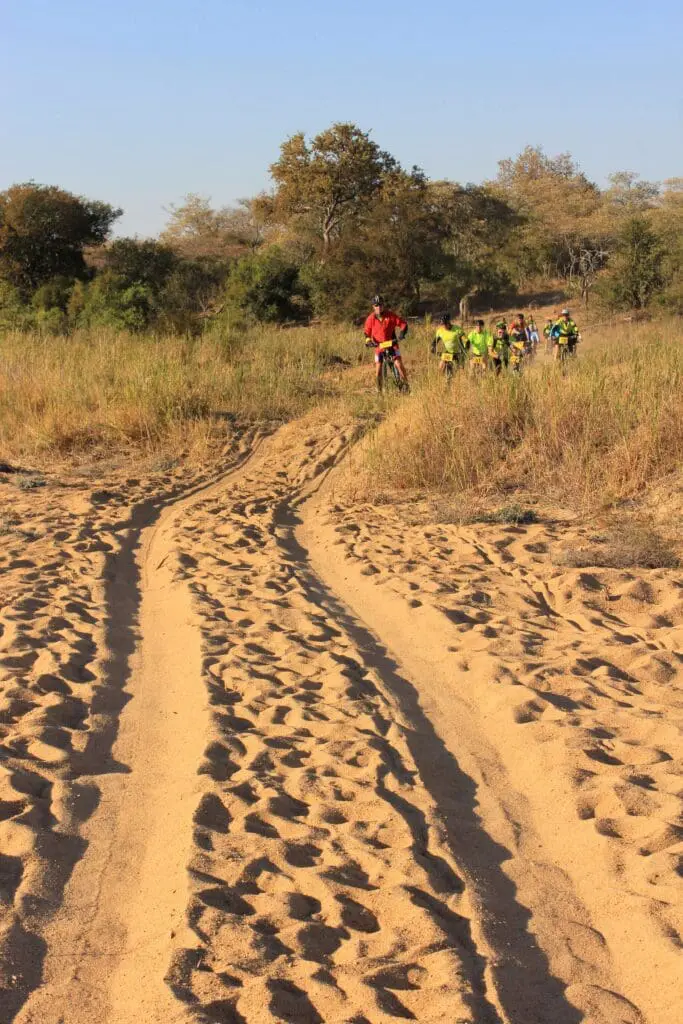
As this early encounter showed, heading into big 5 territory on a bike is no small under-taking; these are wild animals and it’s a huge privilege to experience their habitat in this way. “We’ll never force encounters; our aim is to intrude as little as possible,” noted Dippenaar.
All the guides involved in the tour have extensive experience with big-game encounters. You could see it in action as they calmly lead their cyclists past the elephants, and then later, past rhinos, more elephants and through a herd of 1500 buffalos, spread out over more than a kilometre. “It was unbelievable,” said Fred Berrange, who was riding for the Leopard Conservation Project. “The buffalos were weaving back and forth in front of us. I have never seen so many together, at every stage of their lives. To know they’re around, roaming in this interconnected system of reserves is awe-inspiring. You also know there is a massive pride of lions somewhere close by. Our guide Joris Bertens did a fantastic job of keeping everyone calm so we could relax and enjoy the sighting.”
As the peloton set off again along the road, venturing down a small section of single track, a subtle chorus of orioles, tchagras and doves accompanied the whirring of wheels. Passing a mixed herd of wildebeest and zebras, the riders headed through an open vlei, where a group of 5 jackals was on the move, noses to the ground. Just yesterday there had been a pride of 8 lions here and looking down, the road was full of fresh tracks from earlier in the morning.
The first kilometres set the rhythm for the day as the riders established a comfortable pace of between 14 and 15 kilometres an hour. River crossings were tricky, but the sand is soft and those who bailed were soon back on their bikes. The rich colours of the fruiting bush willows blurred with the silver cluster leaves. As the sun warmed the bush, the smell of wild basil mingled with the dust.
The cyclists quickly added some fresh leopard spoor to their list and rode through an area that had been churned up and well fertilized by thousands of hooves, breathing in pungent lungfuls of buffalo; probably the same herd from earlier. Although the guides have all seen lions, elephants, rhinos, and more from their bikes, each wildlife sighting was special.
That point was driven home when we encountered 2 rangers on anti-poaching patrol, giving recently appointed Timbavati warden Bryan Havemann the opportunity to share a success story; this team had recently been involved in an operation in Kruger and had apprehended some poachers with the help of their dog. We gave them a round of applause. “This is a large part of why they’re riding today, to support the work of these guys,” noted rider and co-organiser Debby Thomson, adding that a portion of all funds raised goes to the reserves involved in the tour.
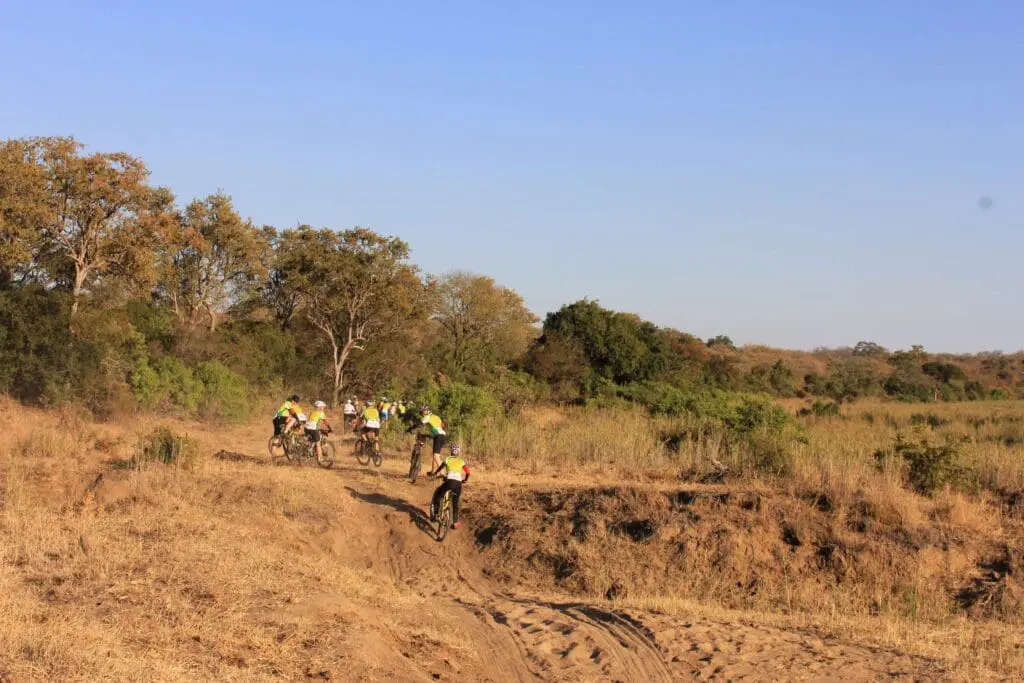
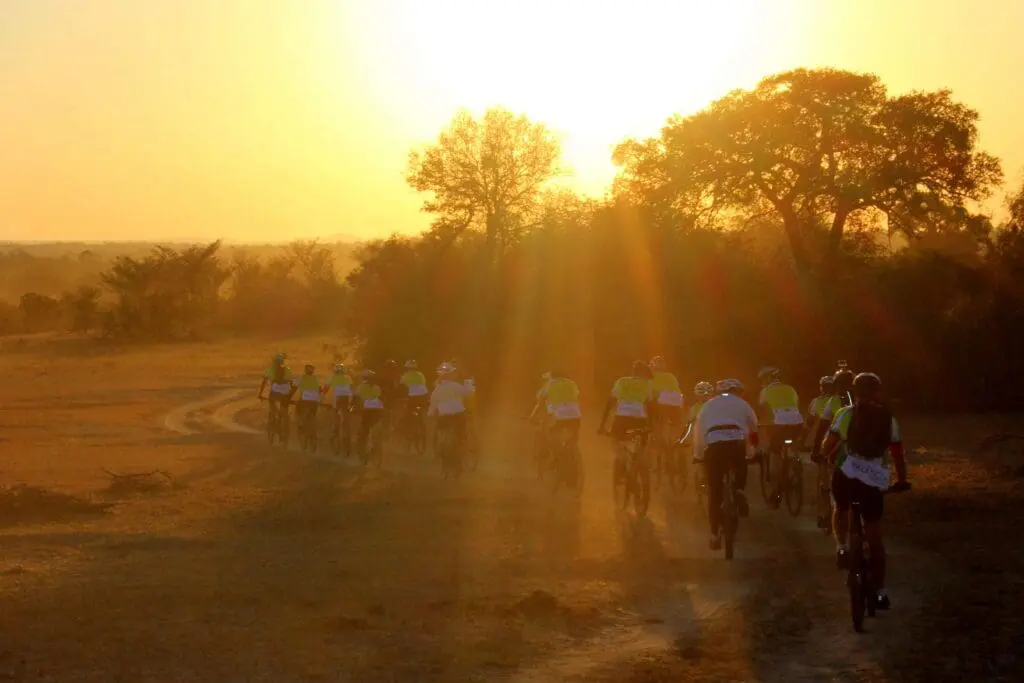
The peloton navigated a gathering of rhinos and buffalos, with riders walking their bikes off the road to safely by-pass the animals. The vehicles left the cyclists at the Timbavati boundary – that section of the race had the highest potential for dangerous game encounters – and the guides and cyclists continued through Thornybush, Kapama and Blue Canyon game reserves as the sun arched westwards.
Stopping at the 44 kilometre mark for some salted potatoes, orange segments, bananas and marsh mallows, Dippenaar pointed to the hazy mountains in the distance. “That valley is our destination – the little dip there is the spot to aim for.” We were almost half way.
The days sightings continued; a kettle of vultures riding a thermal, a majestic waterbuck and some curious giraffes. There were encounters with kudu bulls, warthogs and lots of noisy guinea fowl. There was a flash of white underwing as some ground hornbills took flight and a tawny blur as impalas ran alongside the bikes. We saw fresh diggings from an aardvark, cheetah tracks in the soil and freshly crusted termite mounds cladding the trunks of marula trees. The mountains grew bigger, clearing from out of the earlier haze. The end of the tour was in sight.
There was a sense of real euphoria as the first peloton came in. “It was awesome, awesome, awesome!” exclaimed Brian and Cheryl Macaulay, whose words are echoed by rider after rider. “The route was fantastic, the guides were brilliant and those elephants were an absolute highlight!”
Good to know
The 2017 race takes place on 15 July and will follow a similar route. It is being organized by Rotary Hoedspruit. Funds raised will be shared amongst participating reserves and other local projects.
The tour costs R2500 per participant, but places are limited so you need to book fast to secure a place.
Riders should be fit enough to complete the 100 kilometre route, but no other experience is needed.
Where to stay
There are a variety of accommodation options to choose from in Hoedspruit and the surrounding game reserves. Rotary is happy to assist with enquires and make recommendations.
What to bring
You need to bring your own bike, but breakfast, lunch and dinner are provided and there are water and snack points all along the route. Support vehicles carry spare parts and tools. Remember that Lowveld mornings in July can be icy, but the days are hot and you should dress accordingly.
Safety
Each group of riders has two lead guides armed with rifles and radios. A ‘sweeper’ at the back keeps each group together and each peloton is tailed by a support vehicle, with emergency vehicles stationed along the route.
Who to contact
For more information on the race contact cycle@k2c-cycletour.co.za or