Exploring nature’s genius in South Africa’s Kruger National Park.
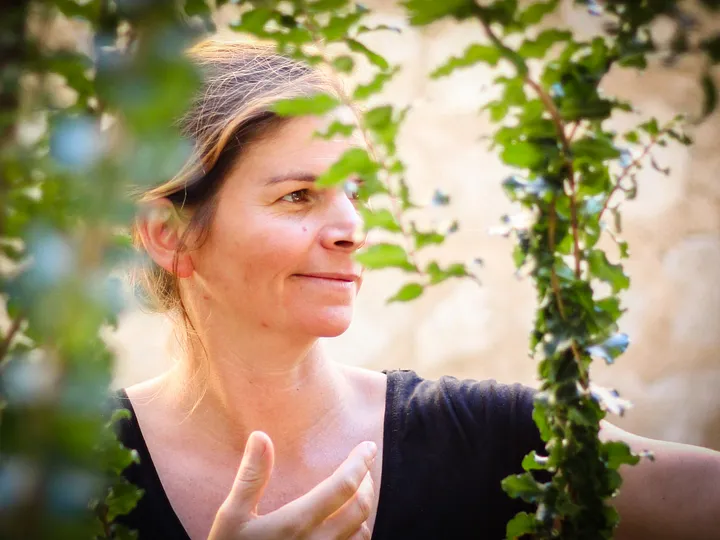
“This place is pure genius,” says Claire Janisch as she picks up a guinea fowl feather. We haven’t walked more than a few metres in the last in the last 20 minutes, and although our biomimicry expedition into the Kruger National Park has just begun, we’re already discovering a new way of seeing the world.
“Nature’s perfected the position of each individual spot on this feather. Each part of every dot is exactly aligned on the individual strands of each feather.Together, they form a perfect whole and then repeat as part of the bigger pattern,” explains the petite chemical engineer turned biomimic.
Humans are natural pattern seekers and nature provides plenty of examples; the markings on a giraffe seem to repeat in a leaf’s veins’ and in how mud dries.
While patterns can help us see connections in nature, what biomimics are looking for is function. “We ask, what’s the message in its pattern? What is it telling us about how it does what it does?,” explains Claire, holding the feather up to the light. “Think about what its form achieves and the biological and physical processes that give it the qualities it has; feathers self-assemble at body temperature without toxins or high pressures, and yet, they are light-weight, flexible, resist buckling and enable flight!”
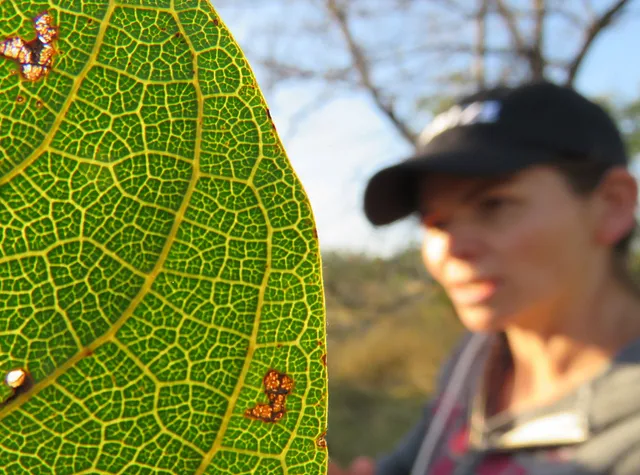
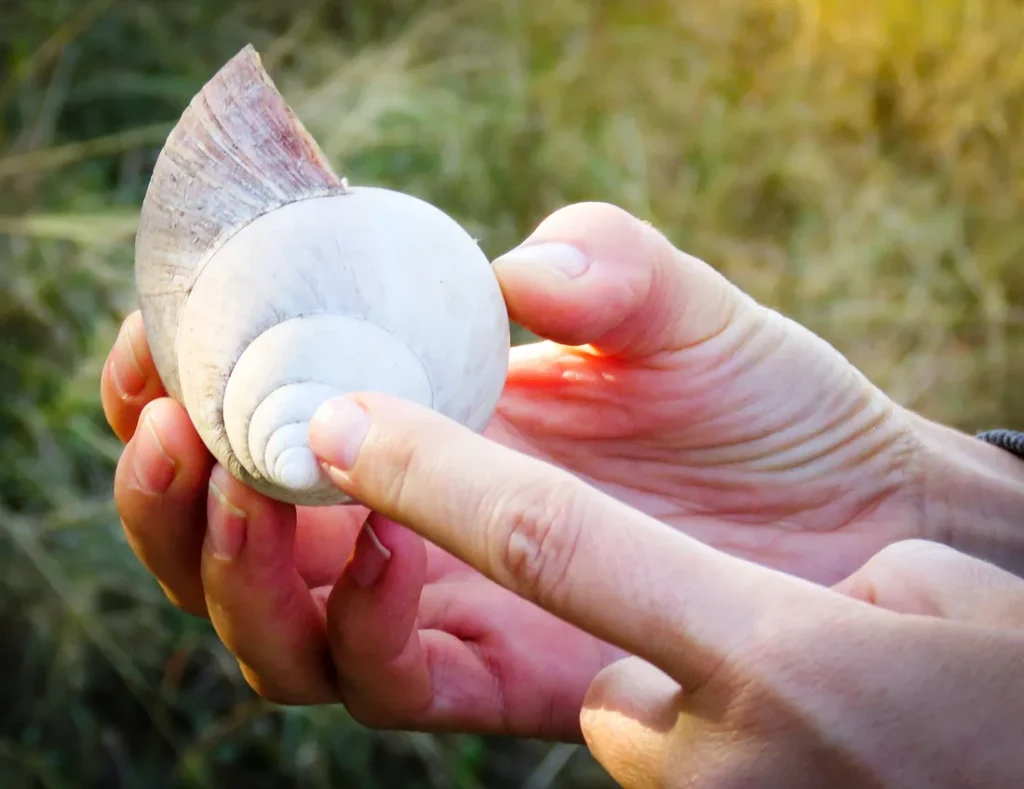
Similar ‘miracles’ of engineering and design are all around as we walk through the mixed broadleaf woodlands south of Skukuza. The seeds of the various sun-ripened grass species are packaging systems for DNA, leaves are solar cells that channel water and nutrients and Kruger is a giant toilet, “yet it doesn’t smell bad and all that waste is turned back into nutrients,” notes Claire, who founded Biomimicry South Africa in 2009.
When her early immersion in the world of chemical engineering left her feeling angry and frustrated at a field that seems to have to destroy to create, she instinctively looked to nature for answers.
“So much of ‘science’ and ‘progress’ is unsustainable. It’s about how to make things under intense heat and pressure that harms life in the long term. I realised we may be clever, but nature is wise,” she says, gesturing to the world around us; “here, everything feeds everything else”.
When she discovered Janine Benyus, whose 1997 book Biomimicry: Innovation Inspired by Nature, developed the basic thesis that human beings should consciously emulate nature’s genius in their designs, Claire’s world didn’t so much change, as come into focus. “Here was someone else who thought the same way I did,” she explains.
Her biomimicry studies took her all over the world and confirmed the deep intuition she’d always felt that most of what we deem human innovation has been ‘invented’ by nature in some shape or other, many times over. “We’re only just beginning to comprehend the stockpile of solutions for common problems like water management or waste disposal that are all around us,” she says, prodding a pile of elephant dung to reveal the small insects hard at work to recycle it; “in nature, a waste depot is a food depot”.
Ahead, some impalas spot us, snort and dart away. “Look at their horns! Something as tough as keratin is made out of life friendly chemistry and at an ambient temperature! What if we could do that?” she asks. “Or what can impala teach us about social living through the way the herd is distributed? How do they recover from the stress of predator attacks?”
These are the kinds of questions that inform biomimicry. Defined as “the practice of learning from and emulating nature’s genius”, there are lessons everywhere. Claire’s job over the five days of the expedition is to build bridges between what we’re seeing around us in Kruger and the disciplines of design and engineering. “A simple trick is to think about verbs, not nouns. We don’t want a car, we want mobility, or accessibility,” she explains as we stop to examine a spider’s web glistening with dew.
Spider silk is one of the toughest and most versatile natural fibres there is. Scaled to human size, it would be capable of stopping an aeroplane! Dragonfly wings have similar raised bumps as humpback-whale fins that have inspired 40% more efficient wind turbine designs. The complex muscular structure of elephant trunks have revolutionised robotic arms, making contact between machines and their human operators safer.
Biomimicry is not just about making better materials though, its also about embracing nature’s deep principles, which biomimics term “life’s principles”. That’s where being immersed in an environment like the Kruger National Park helps to connect the dots, linking better design to a system of more sustainable and resilient living.
“Once you look at something in nature and see how it fits form to function, you can mimic the natural process that created it, but you also need to think about how it works in context to restore rather than deplete the world. Solar power may be ‘greener’ than coal; but it’s panels are produced in toxic factories and high temperatures and they don’t biodegrade,” she says. “Now look at a leaf. How does it do the same function, yet use solar energy to make itself from life-friendly chemistry and end up building top-soil?” she asks.
In Claire’s hands, a humble leaf becomes a vessel for the fundamental design lessons perfected in nature over billions of years. If applied to any project or process, they don’t just help reinvent materials; they help us design in ways that create conditions conducive to life.
“Leaves are nested, modular, multi-functional and use only the energy they need. They rely on freely available energy, recycle themselves and are resilient to disturbance. Many different kinds of leaves meet the same function, they optimise rather than maximise and grow in coordination with others. They are locally attuned and responsive, use shape to determine function and their chemistry and materials are life friendly,” she explains. They also solve for contradictions, storing energy to grow and spending energy to protect themselves from animals that want to eat them.
“Then think about the branch the leaves are attached too. It selects for optimal growth while navigating the wind, the sun, and all the forces that bear on it. Imagine if we worked with these forces, not against them? How would we build?” asks Claire.
In a matter of hours, a bush walk’s become a journey into nature’ genius and wisdom, with answers to life’s problems hidden everywhere in plain sight. Trees become silent pumping systems for water; rhino horn is a self-healing material, zebras are air conditioners that regulate temperature and the mucus that coats a giraffe’s tongue is a lubricant that enables it to eat the thorniest of meals, but may also allow us to replace toxic industrial oils with a water based, non-polluting ones…
While biomimicry is about finding pathways to innovation it also effects a deep reconnection with nature. It’s impossible not to be amazed as nature’s most mundane components — the ones we hardly look at on safari — are transformed. While the engineers, architects and designers may join an expedition to look for solutions to specific problems, just being immersed in nature with Claire feels profound. How have we strayed so far from this self sustaining world all around us; ignoring life’s principles in almost every aspect of human design?
“We’re part of nature, we’ve just become badly adapted to it and need to find our way back,” says Claire. “We are the human expression of nature; its solutions are our own.”
Claire Janisch died on Monday the 7th of Feb 2022. Her legacy and work live on.