“Amsterdam, are you with us?”
“Heinekens are ready. Liv’s got her verrekijker (binoculars).”
“New Hampshire’s here.”
“London too.”
“How’s the line in Zim?”
“Good. Gin and tonics are lined up.”
“Hot chocolate for Apeldoorn…”
The family WhatsApp group was firing fast, as we gathered around our screens in the USA, the Netherlands, the UK, Zimbabwe, and South Africa. It was just before Christmas 2020, and we were all locked down due to various Covid-19 restrictions. Much-anticipated trips had been cancelled, and the distance between us had never seemed greater.
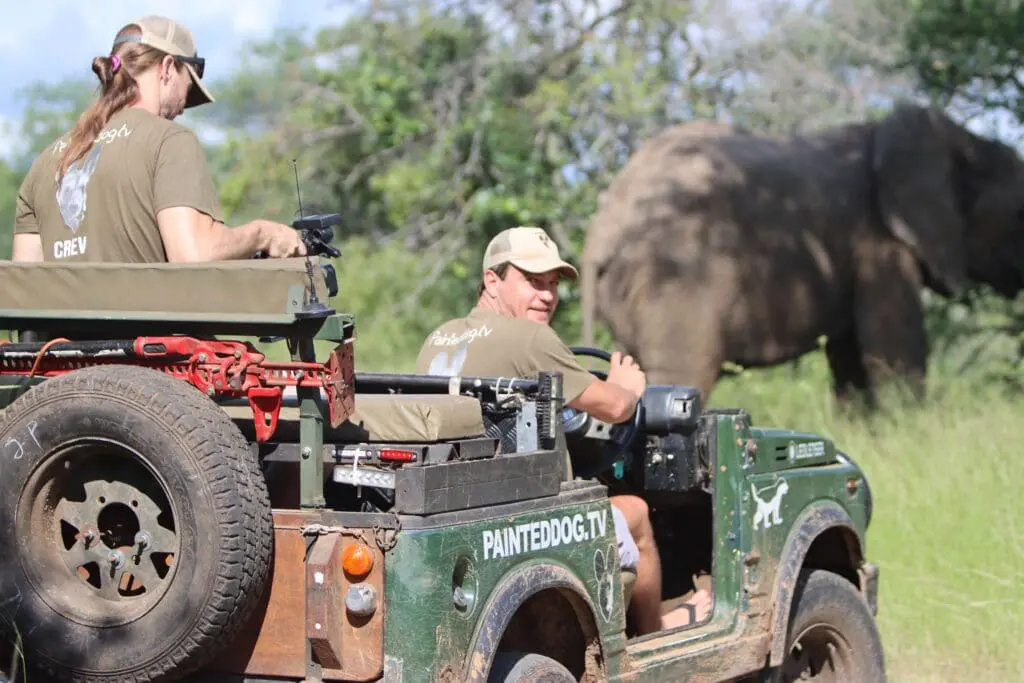
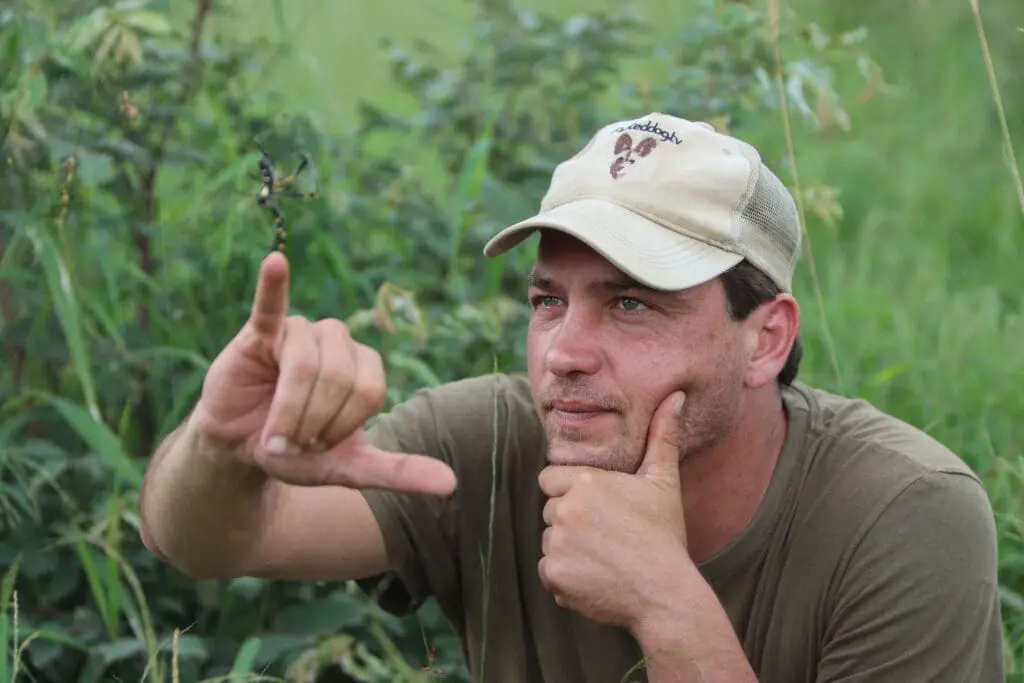
Meanwhile, on Pridelands, one of Kruger National Park’s associated private nature reserves, filmmaker and naturalist Brent Leo-Smith was heading out on drive with cameraman Bryan Joubert to search for baby impalas, elephants and if they were lucky, leopard or wild dogs. In the control room on the reserve, Painteddog.tv’s Wium Dörnbrack cued the music: “three, two, one…”.
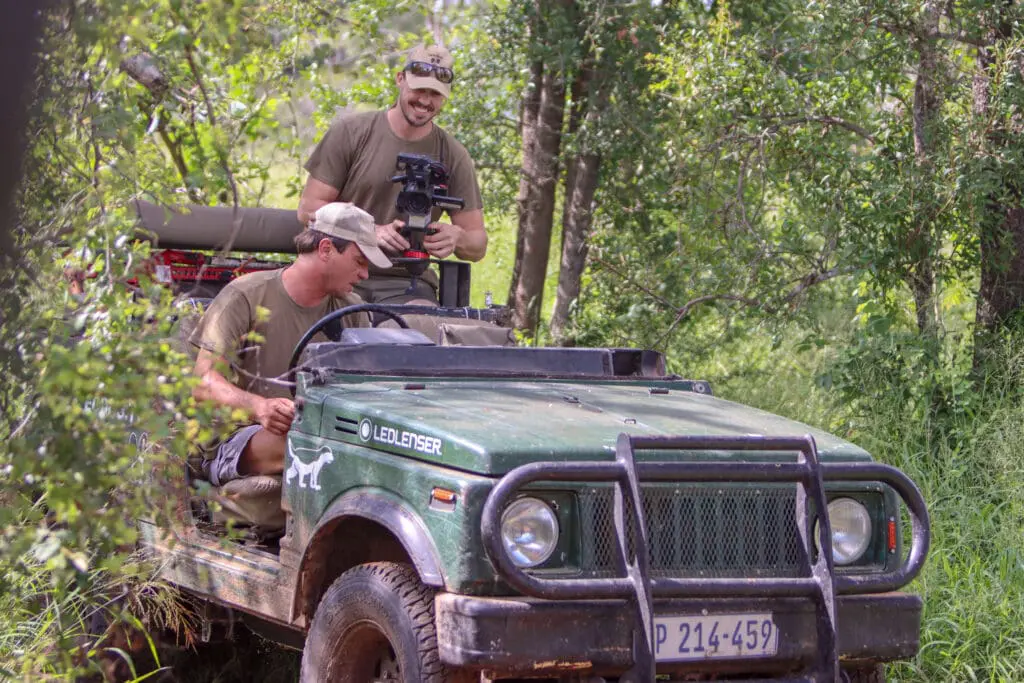
Brent was live. “It’s a beautiful afternoon here on Pridelands,” he boomed. For the next two hours, we were bumping over dirt roads with him in the Badger, his modified Suzuki, on a reality-defying virtual game drive through the bush.
“This is so much cooler than I expected,” typed my 12-year-old nephew John Bakker, who was bundled up on his couch in a freezing New Hampshire with his iPad.
“I can almost smell the bush,” typed my sister-in-law, Simone Roerig-Zijlstra from a rainy Amsterdam.
The idea of broadcasting from the bush isn’t new. There are more than 17000 sites globally where fast internet speeds and live webcams give people an intimate view of the wild. The first of them, Africam, launched in 1999, sending static snapshots of the bush taken at 30 second intervals, to screens around the world. During months of lockdown in 2020, global interest in virtual safaris exploded.
In June 2020, Painteddog.tv launched the world’s first private African virtual safaris for small groups of paying guests. As a family, we’d just had to coordinate diaries across time zones, pay for our seats, and click the link to our drive at the appointed hour.
Big five sightings on Pridelands are less prolific than on other reserves Brent’s presented from with WildEarth TV, Graeme Wallington’s pioneering 24/7 tv channel that started broadcasting from the Sabi Sands in 2007. Pridelands only dropped its fences with Kruger in 2017 though, “so it still feels like a bit of an undiscovered paradise,” said Brent, as we headed towards a spot called Pixie Pan, to look for leopards.
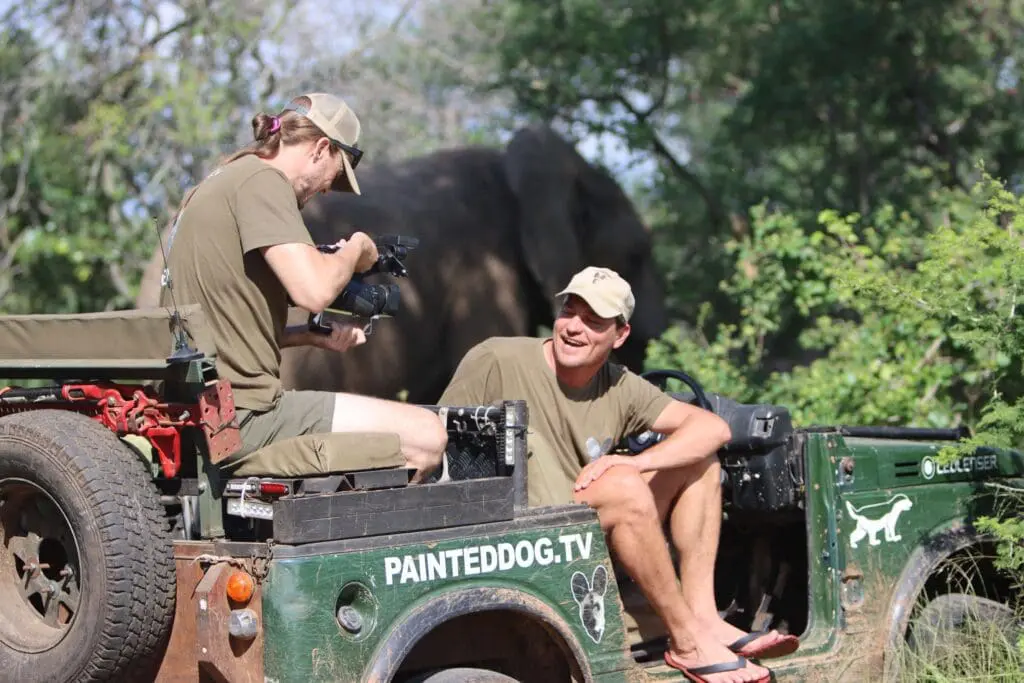
Rapidly developing broadcast technology means new possibilities are opening in the live safari space all the time, something that Sci-Fi legend Arthur C. Clarke anticipated in 1977, before Brent was born.
“He [Clarke] was speaking at a celebration of the centenary of the invention of the telephone and made several wide-ranging predictions about the future of communications,” says media professor Ian Glenn, who is investigating the history of wildlife documentary filmmaking for an upcoming book. In this address, Clarke predicted the rise of “personalised television safaris”, with “instant feedback from viewer to cameraman”.
“How nice to be able to make a trip up the Amazon, with a few dozen unknown friends scattered all over the world, with perfect sound and vision, being able to ask your guide questions, request close ups of interesting plants or animals – in fact sharing everything except the mosquitos and the heat,” Clarke expounded.
We weren’t in the Amazon, but we were living Clarke’s dream in the greater Kruger, chatting to Brent via YouTube chat and WhatsApp as he navigated the Combretum woodlands. Having guided all over Africa, Brent knows a lot, but viewers connect with his passion. “That is just gorgeous!” he enthused, spotting a violet-backed starling for Bryan to zoom in on. Soon the kids were bombarding him with questions.
“What’s your favorite bird?” yelled my four-year-old Bram, delighted when Brent replied that he has many, but in the greater Kruger, he likes African hawk eagles and white-throated robin chats.
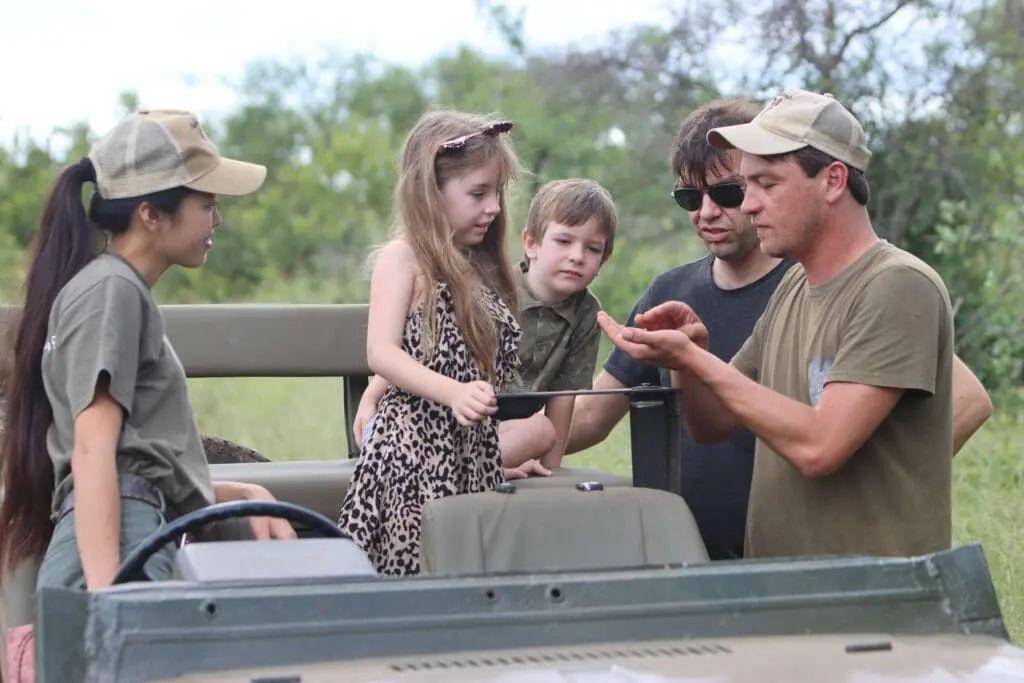
“Ik heb nog een vraag voor de man (I have another question for the man),” yelled my niece Liv in Amsterdam, as though the screen wasn’t there.
My brother, William Tipping-Woods in London, was a little more reflective: “I really, really miss this. I can’t believe how I used to take it for granted,” he typed.
We watched the purple tongue of a feeding giraffe delicately pluck fresh shoots off a knobthorn, then examined the exoskeleton of a scorpion. “It’s made of chitin, which is similar to the shell of a shrimp,” Brent explained, his green eyes connecting with ours through the screen. My daughter Sanne asked if he’d been stung by a scorpion (yes), then if he has a dog (he does), and then if there are too many elephants in Kruger. “I personally believe that there aren’t, and with the transfrontier parks and the associated private nature reserves, as well as new developments in Mozambique, the elephant population has space to expand its range,” he answered.
On a private virtual safari, there are only usually 8 to 12 guests, so every question gets attention. “We talk about whatever you want to talk about – hunting, poaching, ethics – we don’t shy away from the issues,” says Brent. It’s a point of pride as much as principal that they “don’t pander to armchair conservationists”.
Guests respond to this tailored, authentic experience, forging bonds with their guide, just like guests on ‘real’ safaris do. They also start to care about the wildlife through repeat sightings, as an animal’s behavior becomes invested with narrative interest, notes Glenn. They want to know how an animal’s story unfolds over time.
This has some inherent risks. Brent lived through some controversial incidents (like a leopard killing a domestic dog) before leaving WildEarth.tv in 2019. There are likely more unscripted moments in his future, but these are “an opportunity to educate people,” says Brent.
Describing Painteddog.tv as a technology-driven wildlife and conservation media production company, Brent, Wium and Charles have been working out their own vision of the future. Their initial focus on conventional film making, using the immediacy of social media to get material out fast, evolved when the pandemic confined people to their homes. A year later and several dozen private virtual safaris later, they’ve shared incredible sightings with fans around the world.
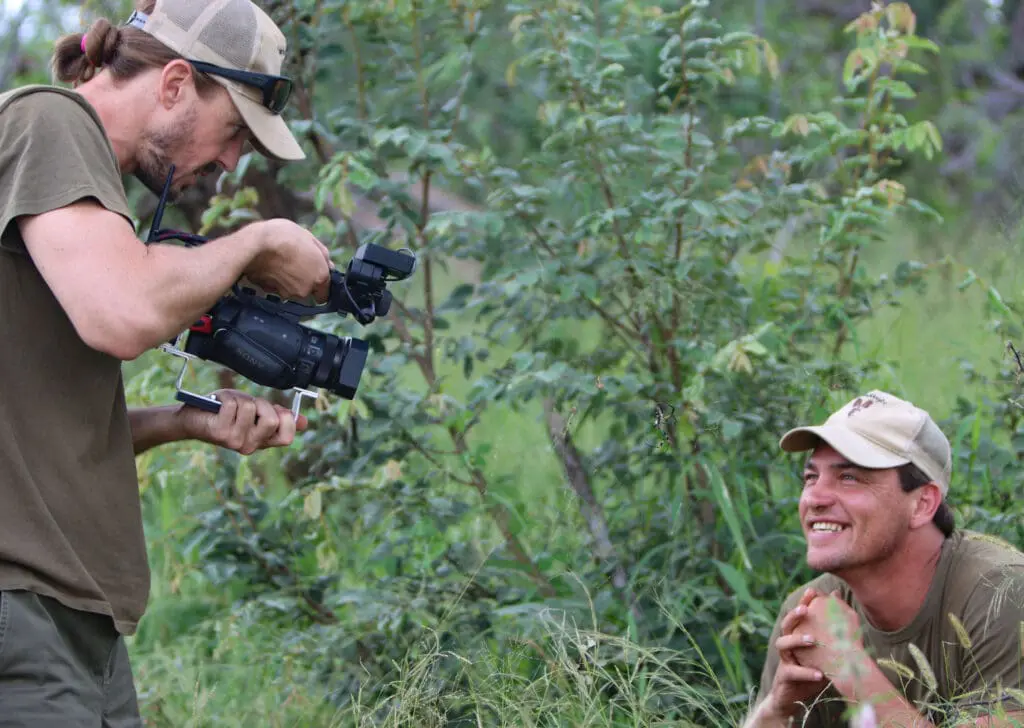
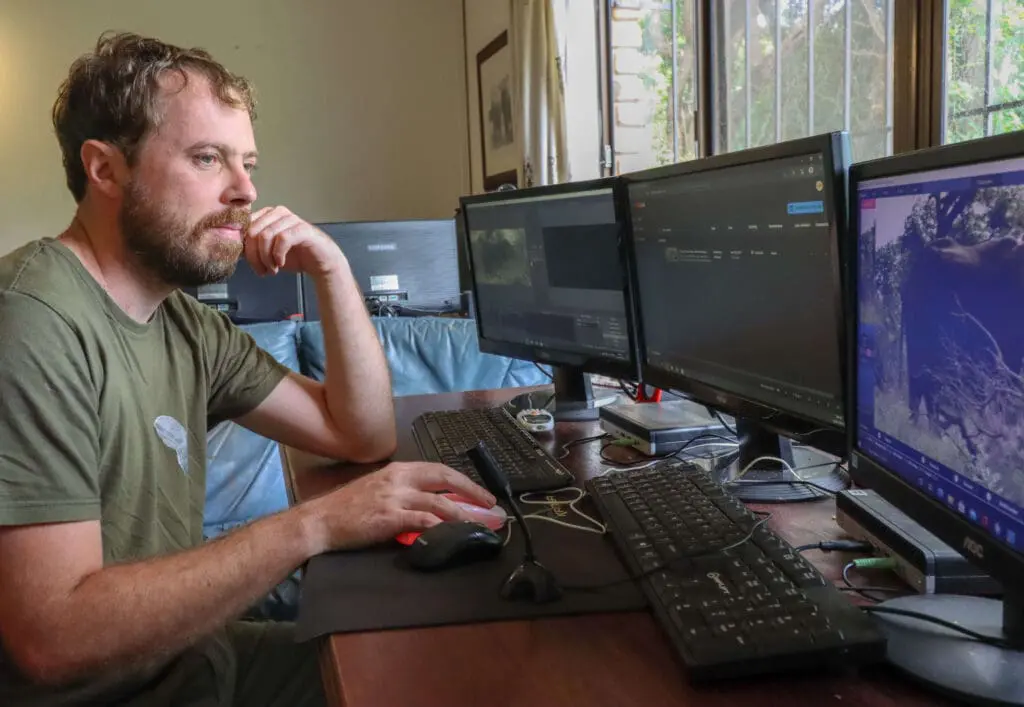
“I love how real the experience is. I can’t watch most wildlife documentaries, because they make stuff up,” says Brent, referencing his wild childhood in South Africa’s Phinda Private Reserve, where he had front row seats to the ‘real’ wild. “I think most wildlife filmmakers start off trying to tell the truth, but there’s a lot wrong with the industry, like the fact that it’s often western-centric. We have incredibly talented and qualified Africans throughout Africa. We should be telling our own stories,” he says.
Increasingly, the stories he wants to tell are the conservation ones, delivering live broadcasts of conservation experiences — wild dog captures, elephant collarings and rhino dehornings — to guests all over the world.
Is this a low-impact way to fund conservation work, and even generate funds for remote areas with little tourism infrastructure?
“It’s becoming a huge focus for us,” says Brent. “We push a lot of boundaries, and it doesn’t always work, but we want to genuinely do good for conservation.”
It all pivots on the technology, and Wium’s assembled their kit in-house. It fits into a standard size trunk, and is robust enough to survive the tough African wilderness. “The kit is continuously evolving, with each iteration having better picture quality and a longer broadcast range. To get our safaris to reach even further into the wilderness we’re looking into military technologies now,” he explains.
Two hours flew by and as the sky caught fire, Brent said good-bye. We didn’t find the leopards at Pixie Pan, but it’s this “willingness to invest time, or put up with longueurs, to enjoy anticipation, to see frustration and unfulfilled hopes as part of authentic pleasure…” that makes a virtual safari a success or not, notes Glenn.
“This was so special for us, the best gift. I really feel so relaxed,” typed my sister, Theresa Bakker, from the USA.
“What a great way to be together in a pandemic,” said my mom, Brigid Tipping-Woods, from Bulawayo, Zimbabwe.
The last message was from my father-in-law in Apeldoorn: “The drive was great. We cannot wait to be in the bush with you all again soon.”
What it costs
A seat on a drive costs US41, which is what a real game drive in a private reserve costs – fair since the guide’s time and the fuel requirements are the same. Booking out an entire drive for US$500 is cost effective for families and corporates. Including small kids, there were 18 of us on the drive. Vouchers are available for anyone wanting to treat friends or relatives stuck overseas and missing the bush.
Check out www.painteddog.tv to see what else the crew get up to. You can also become a Patron and access exclusive content via their Patreon account: https://www.patreon.com/PainteddogTV.
Pros of a virtual safari
- You can watch from anywhere with an internet connection.
- You can build a relationship with a guide without having to physically travel.
- Get viewers to care about more than just the Big Five.
- The engagement may build stronger support for conservation.
- Even indoor experiences of nature can be good for humans.
- Drives promote conservation ideals while reducing environmental pressures on wilderness.
- Live broadcasts of conservation-related events can potentially help fund conservation and benefit communities in remote areas, or areas that have lost their tourism revenue.
- The experience can stimulate authentic interest in the real thing (look out for PaintedDog.tv Travel, launching soon).
- The range of destinations is growing all the time.
Cons of a virtual safari
It’s not the real thing (and hardly the equivalent of a week in the bush)!
Other virtual safaris
WildEarth.tv brings twice daily and interactive safaris from various reserves in the Greater Kruger, including Djuma, Cheetah Plains and Chitwa in the Sabi Sand, &beyond’s Ngala Private Game Reserve, Thornybush, Pridelands, Tswalu, and the Mara Conservancy.