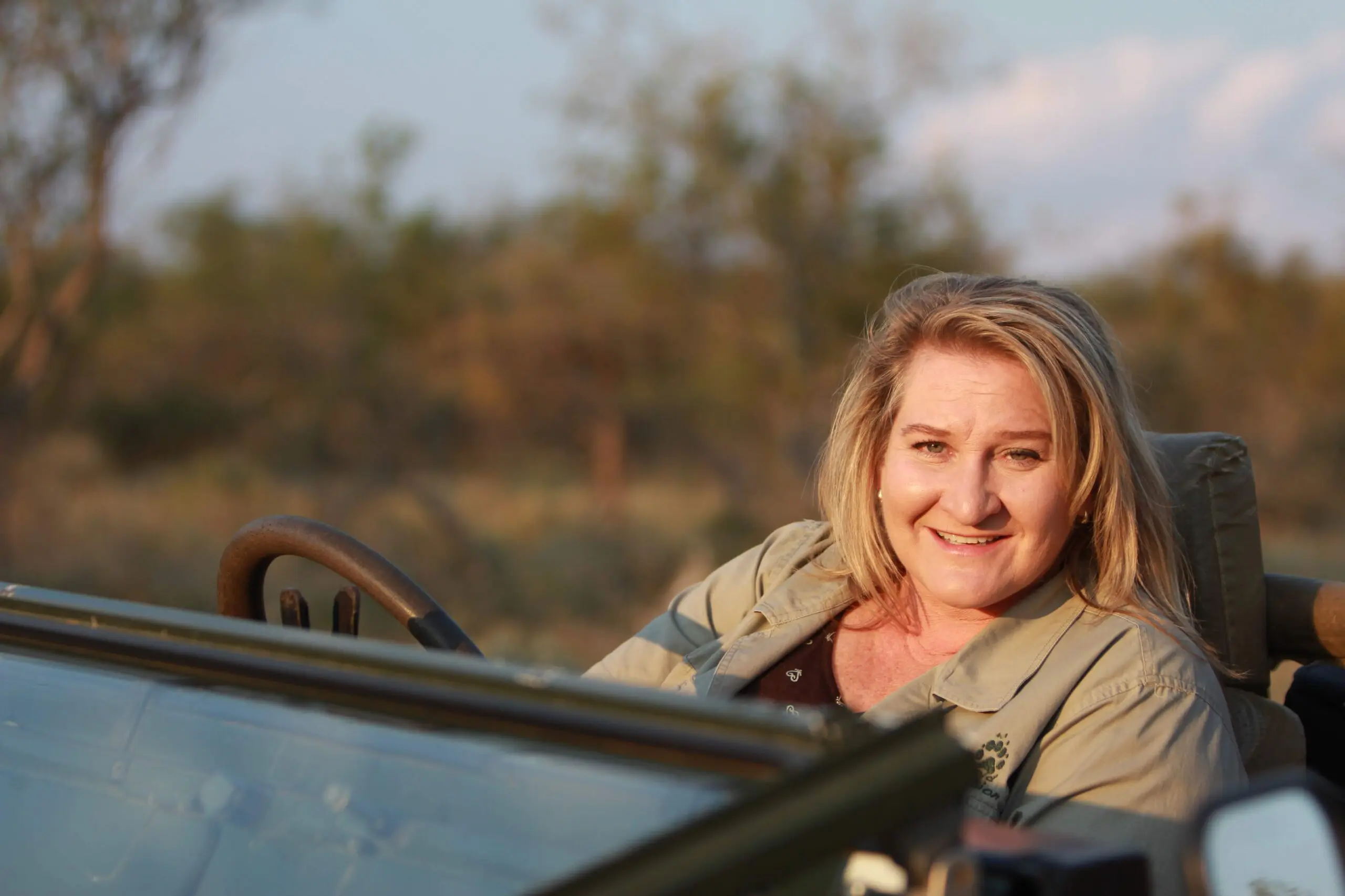
My admiration for Sharon Haussmann began with hyenas. New to the Lowveld, I heard about a woman obsessed with these fascinating, complex, and misunderstood creatures. We drove to the den site she’d been frequenting and watched baby hyenas wrestle. Sharon wasn’t yet the conservation powerhouse she has since become. Still, even then, it was clear that she was a woman whose intellectual curiosity combined rigorous observation with deep empathy for the natural world.
As we laughed over the antics of two six- and eight-week-old hyena cubs, Sharon’s fascination with a third from a previous litter, a cub with a missing leg, stood out. Where others might have seen only tragedy or limitation, Sharon saw a mystery waiting to be solved. She threw herself into understanding hyenas, consulting experts like Kim Wolhuter and Gus Mills. She spent hundreds of hours with the hyenas and contributed to scientific papers. She formed a deep bond with Tripod, the three-legged cub, who went on to thrive.
Today, Sharon has as much love, but less time, for hyenas. As CEO of the nonprofit Greater Kruger Environmental Protection Foundation (GKEPF), she helps coordinate conservation efforts across one of the world’s largest connected landscapes. Her role involves balancing wildlife protection with the complexities of economic inequality, land-use politics, and community relationships. “Conservation is not an area of instant gratification. It’s a long game, a slow process,” she says.
Sharon’s connection to nature began on a Lowveld farm, where her days were marked by fishing, exploring, and building dens. Shoes were optional until school administrators insisted otherwise. “I was wild,” she says unapologetically. “Very wild.” Perhaps this unrestrained beginning gave her something few acquire—a compass that always pointed back to the wilderness. By age five, Kruger National Park felt like an extension of her backyard. Animal-obsessed, she often asked her father, “Who looks after them? Who makes sure they’re okay?” She imagined every creature needed care, just as her mother cared for her and her siblings.
Sharon’s first ambition was to become a wildlife vet, a career that seemed to dovetail with her childhood spent rescuing strays. However, her aptitude in math and science earned her an elite scholarship for women in engineering—a groundbreaking initiative at the time. She was intrigued by the challenge, although the opportunity didn’t come with a map for navigating an overtly male environment. “Boys would ask if I was lost or looking for the cooking class,” she recalls, but they were asking for help with assignments six months later. She was the only woman to finish the course.
Her academic success was driven more by her commitment to equality and high standards for herself than a love of engineering, and her first foray into the industry – mining –immediately felt at odds with her instincts. “I saw destruction everywhere. It went against every fibre in my body.” Yet those years were not wasted. They taught her how to endure, problem-solve, and make herself heard in rooms where she wasn’t always welcome.
After graduation, Sharon learned to fly light aircraft, becoming the second woman in South Africa to earn her license. She spent hours untethered to the ground or other people’s expectations, with a map strapped to her leg in a plastic bag. “Flying gave me perspective—literally and figuratively. It was incredible to be up there, to see how it all comes together and how [the landscape] is connected.” An aerial hippo census over the Sabi River rekindled her fascination with conservation. Still, her need to make a living was more pressing.
The Lowveld’s macadamia industry was in its infancy. She took out an R7,000 loan, consulted with the best in the business, and over the next decade, she built her macadamia propagation nursery into one of South Africa’s largest, employing 40 women and helping them attain some financial independence in a culture where wages often disappeared into the pockets of men. She became the first female chairperson of a farming association in South Africa. “Working with women with babies on their backs, learning from them, helping them get bank accounts…It became about more than making money. It was about helping them reach their potential.” She is still in touch with some of these women today.
In 2011, Sharon had a husband, a longed-for baby, and a motorbike accident. The accident left her with a broken back and a new clarity about her future. “I realised I wasn’t where I wanted to be,” she says. She moved to her family property on Balule Private Nature Reserve, where she went on to become the first female chairperson in 2017.
One of her first acts on moving back to the bush was to declare her family’s land – zoned for agriculture but teeming with wildlife – a nature reserve. This bureaucratic odyssey required convincing neighbouring farms to join her, lobbying the government and engaging conservation leaders. “I wanted to know that a hundred years from now, this place would still be wild,” she says. Around the same time, the rhino poaching crisis exploded, testing her in unimaginable ways. “Seeing those carcasses… it was horrible. You start to wonder about everyone around you. Is it them?” Despite paranoia and exhaustion, she refused to stand by. “I couldn’t do nothing,” she says.
Sharon is candid about the toll of the crisis. The last few years have cost people she loves their mental health, their families, and even their lives, she notes, recalling the 2022 murder of her colleague Anton Mzimba. “You lie awake at night wondering what more you could have done.” There have still been no arrests for his murder.
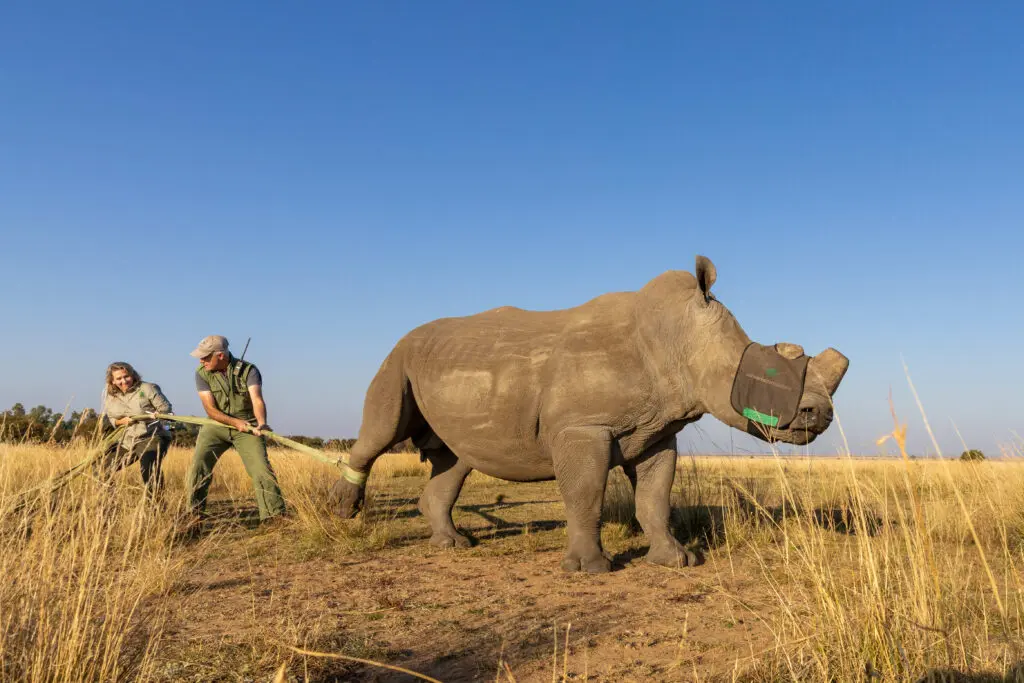
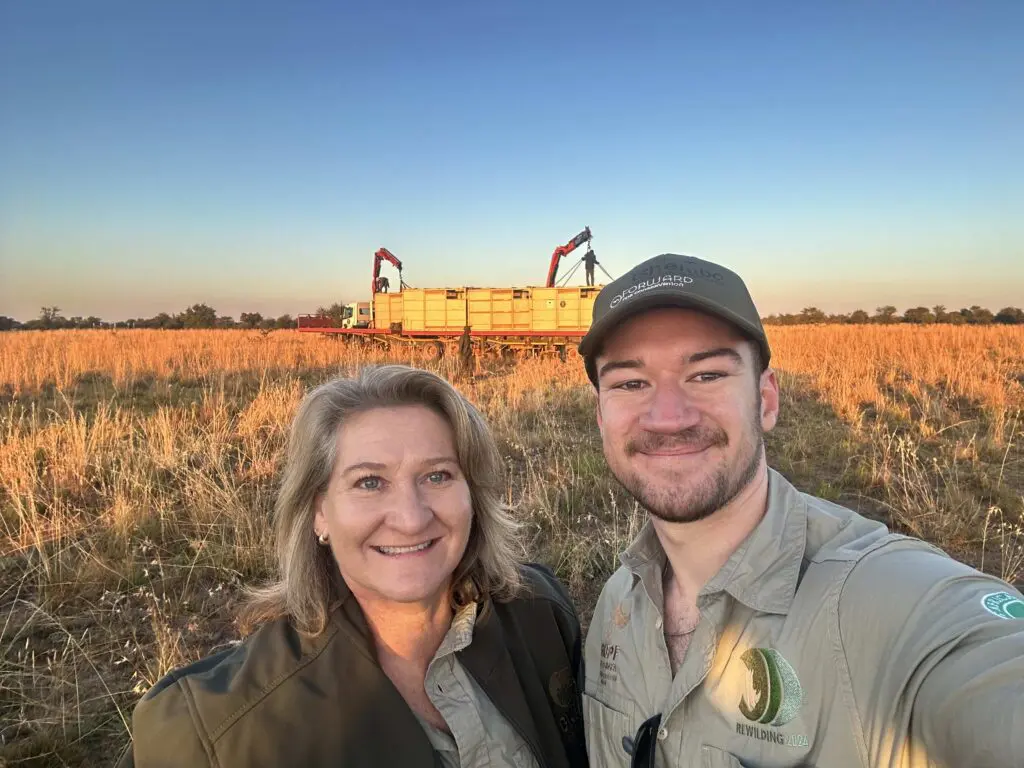
Yet there have been incredible highs, including intense collaboration with colleagues she respects and admires, and the recent collaboration with African Parks to release 120 rhinos into the Greater Kruger Landscape in June 2024 and restore their role in this ecosystem. This was part of the Rhino Rewild initiative, which aims to reintroduce 2,000 southern white rhinos to protected areas in Africa over the next decade.
Still, she believes the bulk of the work remains. “You can’t isolate protected areas and conservation from the four million people living next to the park,” she insists. In the wilderness, time moves slowly and deliberately, but the work to protect it is urgent. “Where’s the real connection?” she asks, challenging conservation paradigms focusing solely on wildlife. “It’s not just about the environment. It’s about the health of the region.”
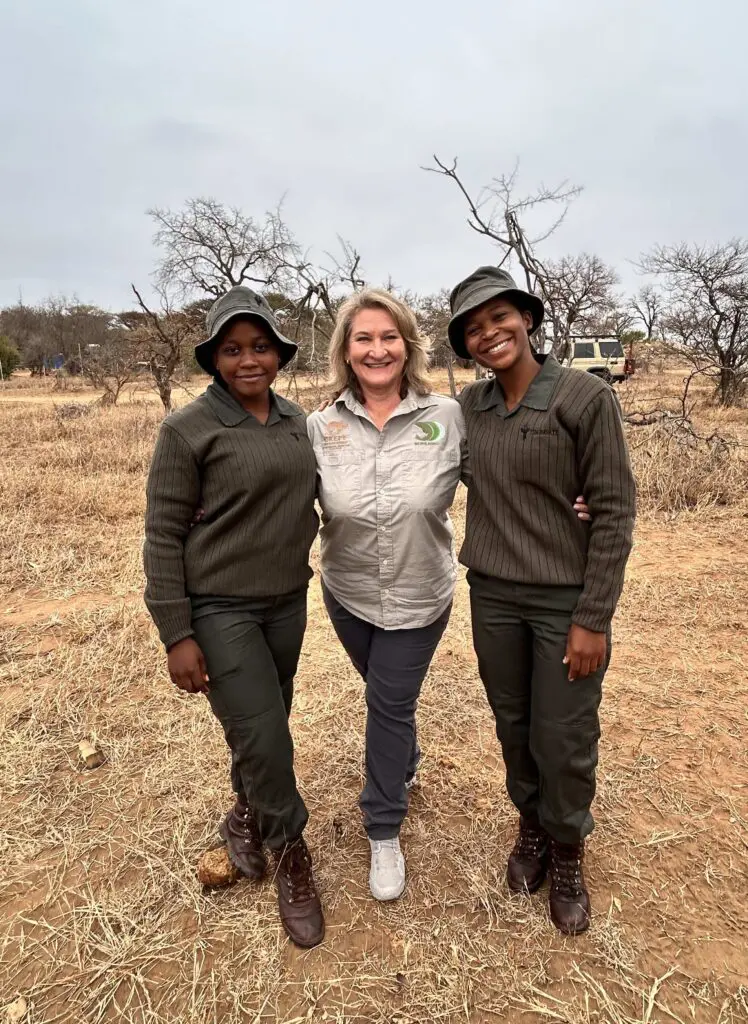
It is a perspective that few articulate so clearly, and even fewer act upon decisively. Under Sharon’s leadership, GKEPF is striving for more collaborative conservation, bringing private reserves, public parks, and local communities together. This has driven her to forge alliances beyond wildlife, including community sports programs and initiatives that foster mutual respect between people and the environment. There is no performance, no pretence in her as she speaks about what she views as the greatest challenge conservation in the Lowveld face. This makes her an anomaly and a beacon. “Someone told me the other day that it’s too big an issue for us to tackle. And I said that is exactly why we need to do it.” She doesn’t have all the answers as to how, but that’s never stopped her before.
Her son is her constant joy. “Every decision I made was with him in mind,” she says. There is less time to hang out at hyena dens. But she takes the moments where she can. An enormous soul steeped in pragmatism. Breaking barriers is what she does. What she has to do.
Postscript:
Sharon died in 2025, not long after this story was first published. She is so deeply missed.