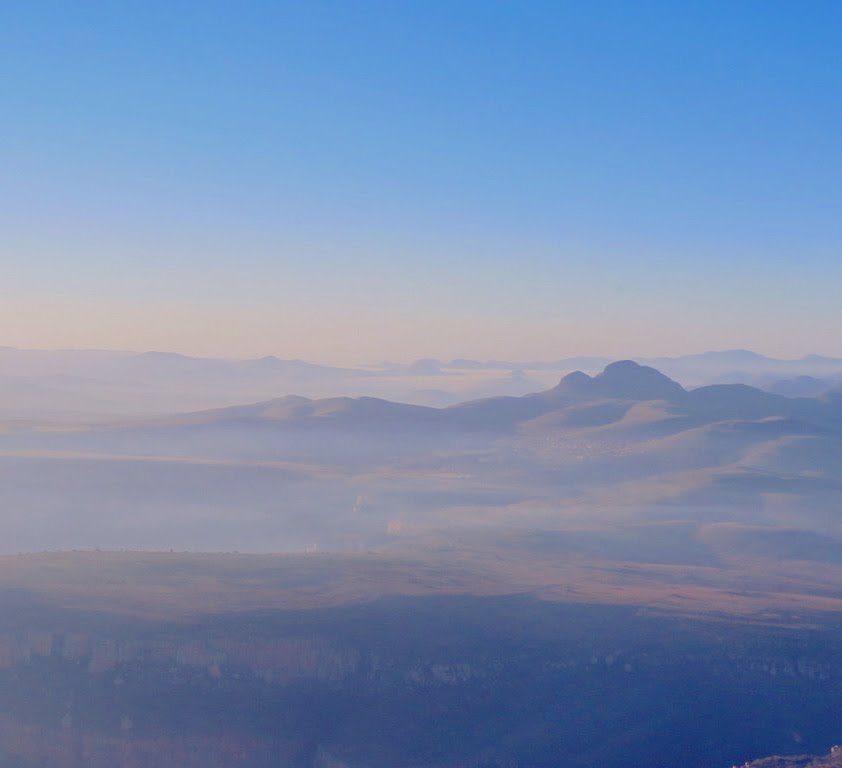
Nowhere is the uniqueness of the landscape more apparent than from the air, where a bird’s eye view gives shape and form to the beauty and diversity that exists between the highveld and the lowveld.
And a bird’s eye view is what you’ll get if you decide to explore the area from the air.
Known as the wild heart of the lowveld, Hoedspruit also has a growing reputation as an aviation hub. You can explore the Greater Kruger National Park, the Blyde River Canyon and everything in between in a number of ways from the air. There are helicopter flips, microlight flights and hot air balloon trips.
More than this though, Hoedspruit has an active airforce base, it’s the centre of operations for many aerial anti-poaching, conservation and research initiatives and many people train here to become recreational pilots. It’s also home to South Africa’s only fly-in residential estate, Zandspruit, where you can buy or build a house with a hanger or attend an international award-winning airshow.
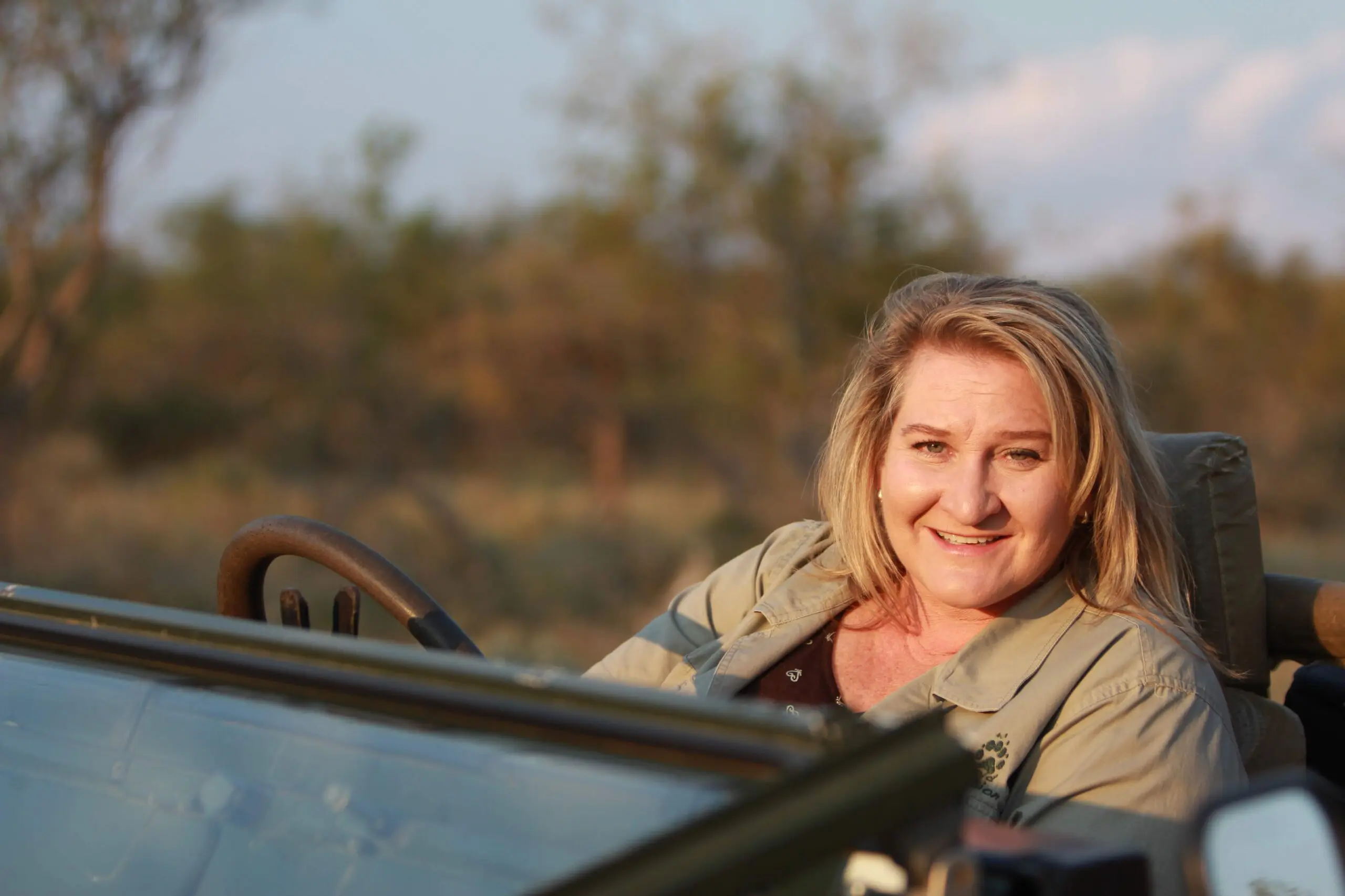
“Hoedspruit’s the perfect place to fly,” says Wynand Uys, chairperson of the Hoedspruit Flying Club. It has blue skies, relatively windless conditions and spectacular scenery. “We’re up in the air nearly 365 days a year,” confirms Rowena Kraidy, who owns Leading Edge Flight School with her husband Deon. It’s also at the centre of South Africa’s rhino poaching crisis, where aerial support has a critical role to play, says Southern African Wildlife College’s Bruce McDonald, who trains pilots for anti poaching work as well as actively participating in anti poaching patrols in the Greater Kruger National Park.
So what are some of the unique, challenging or exhilarating opportunities for residents and visitors to take to the skies?
The helicopter flip
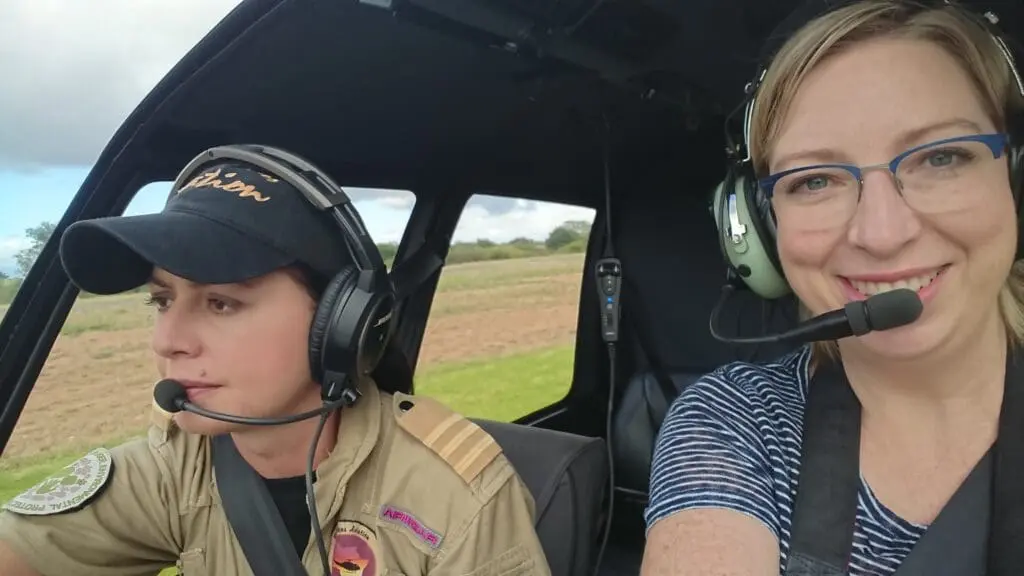
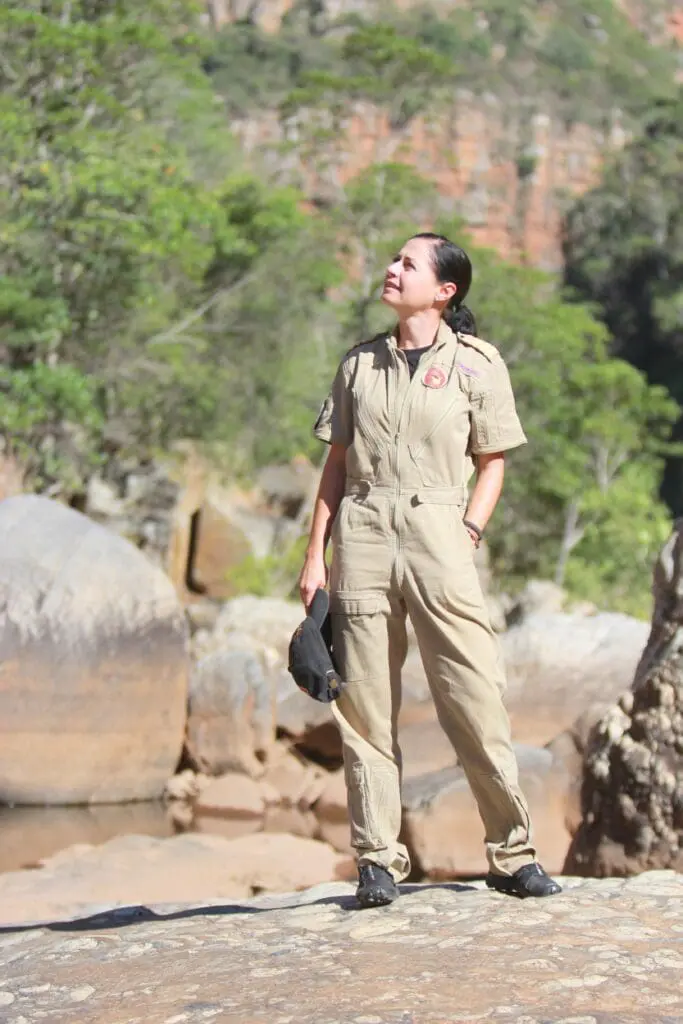
As the Robinson R44 Raven II skimmed the grassy top of the escarpment and swooped over the edge of the Drakensberg mountains, there was a moment of pure exhilaration, then awe at the unfolding wonder of the lowveld far below. An elated glance at pilot Jana Meyer confirmed that the thrill was shared; we were birds – eagles- and this was the grand finale to our dance with earth and sky.
When the helicopter had taken off from Hangar 6 at Hoedspruit Civil Airfield, I hadn’t anticipated just how unique an experience I was going to have. Strapped in, with the glassed-in cockpit providing 270 degree vistas, we’d surged upwards over the farmlands surrounding Hoedspruit and headed for the mountains in the distance. By the time we reached the Blyde Dam near Swadini, and circled down to look at a pod of hippos in the still, indigo water, I was seriously impressed.
Then we entered the world’s largest green canyon.
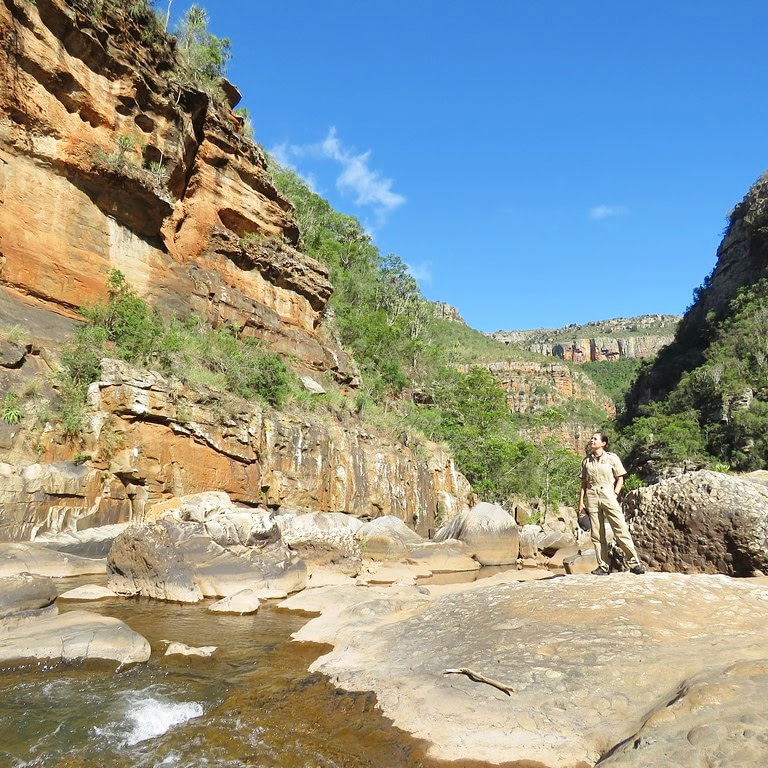
Our flight followed the Blyde River and the contours of its fantastic geology; rocky conglomerates glistened in the sun while the river ran in rapids, jumping from pool to pool, streaming in waterfalls over rock faces rich with vegetation and pooling in still hollows.
We hovered alongside a cliff covered in lichen and moss, swooped in on banks of euphorbias and maneuvered with the freedom and precision of the river itself.
I couldn’t believe the dexterity with which we navigated this secret world, which is largely unexplored and inaccessible, even on foot.
My mistake had been to imagine we’d fly above the canyon, not in it. I’d also underestimated the agility of a helicopter in the hands of a skillful pilot, something that Jana learnt about right at the beginning of her career, working as a nature conservation graduate in game capture in the Kruger National Park. “It blew my mind how integral helicopter work is to conservation, and how a helicopter can be deployed in various ways,” she explained.
She took out a loan to learn how to fly, put in the hours, and has finally worked her way to where she wants to be; running Wild Skies Aviation and pursuing her life-long dream of flying in ther service of conservation. Much as she loves the scenic flips with Hoedspruit Helicopters – “a sensory thrill” – they’re also a necessary part of resourcing a viable conservation and anti-poaching programme. Just recently, she helped dart a bull elephant that needed veterinary attention in Manyeleti, and regularly supports anti-poaching efforts; “we pick up dogs and take them forward on the spoor and we do suppression flying to allow ground troops to catch up with poachers; I live for this,” she adds.
The microlight safari
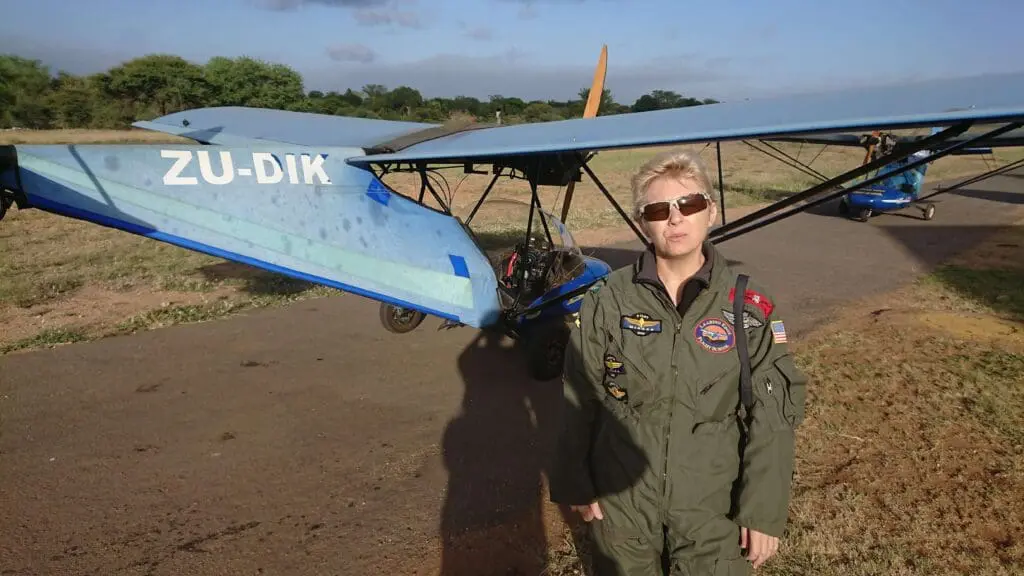
Climbing to 6500 feet over the Blyde River Canyon in a conventional controlled microlight aeroplane isn’t the adrenaline rush I expected. Instead, it’s a calming and deeply meditative experience as the patchwork landscape is transformed into a masterpiece of shadow and light.
Pilot Rowena Kraidy grins at the expression on my face as we calmly circle above the canyon, before flying back to the Greater Kruger National Park to spot wildlife from the air.
We took off just before sunrise, and although exposed to the elements in an open cockpit, my expected nerves never materialised. Rowena, whose is more herself in the air than on the ground, controls the Bantam as though its an extension of her body. Having spent 2500 hours in the air, she’s half bird herself.
With her husband Deon who has 5500 flying hours, she’s been running Leading Edge Flight School in Hoedspruit since 2003. Along with scenic flights, they have an aircraft maintenance unit and train dozens of pilots each year.
We cruised past cliffs covered in aloes, glided alongside the Three Rondawels and watched as the mountains changed from the deepest of blues to vibrant greens, oranges and yellows as the dawn haze receded and rockface lapped up the sun beams.
“The mountains really are changing all the time,” said Rowena, explaining how the moss, which is a vibrant green, is covered with the warmer tones of the lichen to project it from the sun as the day warms up. “No two flights are the same.”
The experience was transformative; a study in light, contours and colours that will forever change the way I view the lowveld, with its mosaic of landuses; mountains edged in lush afromontane forest, precise fields of citrus, avocados and mangos interspersed with circles of corn and tracts of wild bushveld.
That was what we headed for next, descending to 500 feet to glide over a landscape studded with elephants, giraffes, zebras, all undisturbed by our presence. “With the game viewing flights, we’re not confined to the roads and can cover really large areas of ground,” says Rowena, whose guests tend to comment on the endless sense of space as much as the wildlife they happen to spot.
The combination of the flight over the canyon, with game viewing in greater Kruger is Leading Edge’s most popular flight; “it gives people a complete overview of the area” says Rowena. To ensure good relationships with land owners, she also reports any unusual activities or poaching related incidents.
The hot air balloon flight
Ballooning is a completely different way to take to Hoedspruit’s skies. While the steady pulse of hot air from the propane burner lets the pilot control altitude and vertical speed, the rest of your flight is up to the wind.“You don’t use force or thrust in a balloon. There are no aerodynamics involved, but you fly in the same space as all these other aircraft,” explains Wynand Uys, who owns Sun Catchers Hot Air Ballooning.
“It’s tremendous fun, but is much more weather sensitive than other types of flying,” he adds, noting that in Hoedspruit, the elements, the terrain and the availability of passengers all make it a viable activity. Flying in the natural ampitheare formed by the mountains, the four balloons he operates are relatively sheltered by the mountains’ embrace, “but it’s never just an A to B flight. We only fly at dawn and in the hour after sunrise and we have about a dozen landing spots we like to use, depending on the wind,” he explains.
Sun Catchers has flown more than 10 000 people since it opened in 2003 and hot air ballooning makes up about 75% of Wynand’s business. He also flies fixed wing aircraft and does environmental surveys, pioneering new approaches to orthomosaics and aerial photography and filming from the air. Like most Hoedspruit pilots, he’s also involved in anti-poaching work; which tends to run on donors and good will; a kind of tax on the pilots who fly these wild skies.
Anti poaching from the air
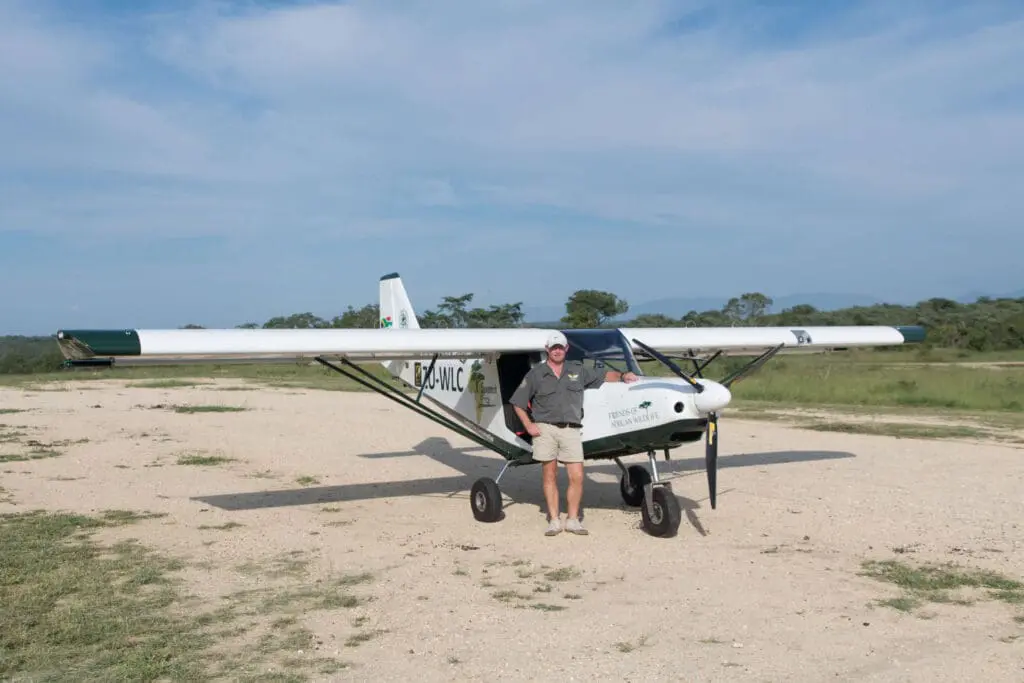
Many of Hoedspruit’s pilots fly for conservation, where “aerial capability is critical,” says Southern African Wildlife College’s Bruce McDonald. He runs their aerial patrol and monitoring Project which trains pilots for anti poaching work and acts as an eye in the sky for Kruger’s rhinos and other vulnerable wildlife. They operate over 500 000 hectares in Kruger National Park and the Associated Private Nature Reserves on its western boundary.
“We recently upgraded to Savannah S, a very capable aircraft that allows us to respond to incursions and contacts quickly and lets us fly at very slow speeds when we need to,” he explains.
Their ground-to-air training, using helicopters and fixed wing aircraft, exposes bush pilots and field rangers to the operational hub for all counter-poaching operations within the central Kruger region; Greater Kruger Environmental Protection Foundation’s Command and Control Centre.
“Communication and coodination between air assets and groundcover units is critical, as is the deployment of field rangers in areas where they are most needed,” he explains. The Savannah is proving to be a very useful for their K9 unit too, especially with tracking and training exercises with free-running anti-poaching pack dogs, which are followed and monitored with GPS technology from the aircraft.
Flying for conservation
Along with this anti-poaching work, there are also many research projects that benefit from aerial data capture and a constant stream of wildlife that need aerial attention; from animals that are ill or snared, to animals that escape from the reserves and need to be persuaded to return. Volunteer pilots are always in demand and, says Wynand, there are always opportunities for them to get their hours in.
A home with a hanger
South Africa’s only bushveld fly-in residential estate, Zandspruit, is in Hoedspruit. It has 161 bush and 38 aero stands, set within 1 000 hectares. Along with the convenience of a 1 000-metre airstrip, the estate’s large wilderness area is stocked with a variety of plains game and is for the recreational use of its owners and residents. The estate also hosts an internationally award-winning air show, which will be held again in (to be confirmed)
Flying school
“These days, if you can afford a 4×4, you can afford to fly; there is no typical client, other than that they generally have a passion for flying,” confirms Deon Kraidy from Leading Edge Flight School. Aspirant pilots can sign up for a conventional controlled microlight pilot licence, a light sport pilt licence and a private pilot licence. “What you choose depends on what you want to do agter you qualify. There are different categories of aircraft and different hours required depending on the complexity of the aircraft,” Deon explains. Some students want to make a career out of flying, others do it for the joy it brings them. “A lot of our pilots just want to fly for half an hour to ease the pain of a stressful day. You leave all your problems on the ground when you take off.”
The airforce base
Of course, Hoedspruit’s association with flying started well before it took off as a recreational activity; the town is home to an airforce base, with 19 Squadron still providing vital aerial support to the town; theur choppers and pilots help fight fires on the mountain sides of the canyon and in the forestry reserves, and heroically rescue people each one of the lowveld rivers flood. In the late 1990s an unused portion of the base was converted into a civilian airport known as Eastgate Airport. It was also an emergency landing site for the Space Shuttle.